

When Low-Volume Metal Batch Production Makes Sense
Low-volume metal batch production is ideal when you need tens to a few thousand parts with robust material properties, controlled tolerances, and manageable tooling costs. It bridges the gap between one-off prototypes and mass production, enabling design iterations, market testing, and phased ramp-up. Teams should evaluate process options, total landed cost, quality controls, and supplier collaboration before committing.
Low-volume metal batch production refers to manufacturing small quantities of metal parts, typically from a few pieces up to a few thousand, using processes like CNC machining, sheet metal fabrication, casting, or metal 3D printing. It makes sense when you need production-grade qualities without committing to high-volume tooling. Common scenarios include pilot runs, bridge production, spares, customization, and high-mix assemblies.
In practice, “low volume” is defined more by business context than a fixed number. An aerospace team may call 200 machined brackets a low-volume batch, while a consumer hardware company might use the same term for 5,000 die-cast housings. What matters is that the quantity does not justify full mass-production investments, such as complex hard steel tooling or highly automated lines. Instead, buyers look for flexible processes that support design changes, moderate tooling budgets, and responsive lead times.
Low-volume batches are especially useful in three situations. During late-stage prototyping and design validation, when the program needs production-like parts for testing and early field trials. In bridge manufacturing, when early customers must be supplied while high-volume tooling is still being built. And in niche or high-value markets where annual demand is structurally low but performance and traceability requirements are high. In all cases, the aim is to balance per-part cost, risk, and speed in a way mass production cannot.
How the Metal Processes Compare
- CNC machining. Tight tolerances and prismatic geometries; higher unit cost with minimal tooling and strong flexibility.
- Sheet metal fabrication. Enclosures, brackets, and chassis from flat stock; low tooling and very responsive to iterative design changes.
- Metal 3D printing. Complex internal features and lightweight structures; expensive material and build time, best for parts that justify them.
- Casting (die, gravity, investment). Repeatable shapes in medium runs; near-net forms with low unit cost at higher batch counts but carry tooling cost.
- Hybrid (CNC + sheet metal + printing). Keeps options open as designs evolve, at the cost of coordinating multiple routes.
From an engineering standpoint, the first decision is geometry-driven. If the part is prismatic with critical machined features, CNC machining is often the default: it offers tight tolerances, wide material options across aluminum, steels, titanium, and copper alloys, and mature quality-control workflows. Sheet metal fabrication is optimal for enclosures, brackets, and chassis, particularly when the design can fold volume out of flat stock and use standard hardware for assembly; bending radii, flat pattern optimization, and the weld or fastener strategy need early attention.
Metal additive manufacturing is compelling for lightweight lattices, conformal cooling, internal channels, or consolidated multi-part assemblies, but material cost and build time mean it is usually reserved for complex or high-value parts. Casting becomes attractive when you expect repeat batches in the hundreds or thousands and want near-net shapes that require limited machining. In practice, many teams combine processes, printing a complex core and machining the critical interfaces, to balance cost, performance, and speed.
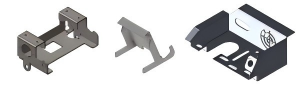
Decision Factors: Constraints, Volume Path, and Change Risk
Key decision factors include annual and per-batch volume, geometry complexity, required tolerances, material and surface finish needs, total cost of ownership, and expected design change frequency. Team capability, quality certifications, and communication quality belong in the same list. Choosing a process without aligning these factors often leads to rework, schedule slips, or inflated costs.
Start with the constraints you cannot change: regulatory requirements, performance loads, operating environment, and interface tolerances. Aerospace or medical applications may dictate specific alloys, process controls, and documentation that rule out some low-cost options. Once the constraints are fixed, map the candidate processes against cost, lead time, and scalability. If design changes are likely, processes with low or no dedicated tooling, such as CNC, sheet metal, and 3D printing, carry less risk than a cast tool that locks the geometry early.
Volume evolution is the second decision. If you foresee stable low volume for years, a flexible setup may be more valuable than the lowest unit cost. If you plan to ramp from 50 to 5,000 units, map the migration path, for example CNC to die casting, before the first batch, because the documentation and quality system must move with it.
Estimating Cost and Lead Time
Estimate cost and lead time by considering material type, part size and complexity, process selection, batch size, finishing requirements, and logistics. A structured cost model includes setup, machining or forming time, tooling or fixturing, inspection, finishing, and shipping. Early supplier quotes help validate assumptions and identify design changes that reduce cost.
For very early estimates, simple rules of thumb, such as cycle time proportional to machined volume and tool changes, or bending operations per part, are often sufficient. As designs mature, detailed estimates should account for fixture design, toolpath strategy, coolant and tool wear, and batch-level setup costs. Surface treatments such as anodizing, plating, or painting can materially change both price and schedule, particularly if they require external vendors or approvals.
Lead time estimation must separate calendar time from touch time. A CNC batch of 30 housings might need only a few machine hours each but take weeks if the supplier’s queue is full or if material procurement and finishing sit on the critical path. As an indicative reference, CNC machining commonly runs 3–15 working days, sheet metal 5–15, metal 3D printing 5–20, and rapid die or investment casting 3–8 weeks; the real value depends on supplier load, geography, and scope, so the range should be confirmed in the RFQ.
Why DFM Is Non-Negotiable at Low Volume
Low-volume projects have less room to absorb rework, scrap, or tooling mistakes, so Design for Manufacturing (DFM) input is one of the strongest levers. Good DFM reduces machining time, improves yield, simplifies fixturing, and avoids costly last-minute changes. Small geometry tweaks, such as adding radii, adjusting wall thickness, or relocating holes, materially improve cost and quality.
Unlike high-volume programs, where tooling budgets justify extensive simulation and trial runs, low-volume projects often go straight from prototype to production, which compresses the window for catching unmachinable undercuts, unstable workholding, or weld distortion. Early DFM reviews, ideally at the 3D model stage, surface these risks while changes are still inexpensive. Request DFM feedback as part of the quoting process and prioritize suppliers who provide clear markup and rationale rather than a bare price.
Quality Control and Tolerances
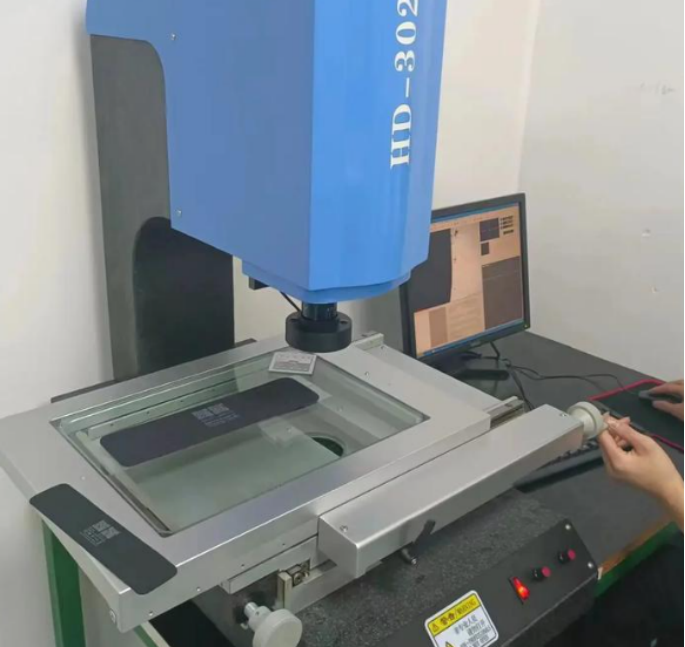
Quality control in low-volume metal production relies on clear drawings, realistic GD&T, and appropriate inspection plans. Critical dimensions are controlled with calibrated equipment such as CMMs or optical measurement systems, while non-critical features may be checked with gauges or manual instruments. Over-specifying tolerances increases inspection time and reject rates without improving function.
For parts that mix processes, the CNC tolerance guide gives the machining side of the expected range, and the same principle applies across routes: specify what assembly and function need, then verify it with a method that can measure it. The measurement vocabulary for such specifications follows conventions maintained by standards bodies such as NIST measurement and standards guidance.
Common Risks and the Response
Common failure modes in low-volume runs include ambiguous specifications, unvalidated design changes, underestimated fixturing or tooling effort, and unclear priority between engineering, purchasing, and the supplier. They often surface as dimensional non-conformances, cosmetic defects, warping or distortion, delayed deliveries, or unanticipated cost increases.
Because there is less time and budget for prototyping, latent design issues may first appear in a production-intent batch. A bracket may meet static load but crack at a weld after repeated field use, and a switch of alloy or process to save cost can shift stiffness or corrosion performance without being noticed until months later. The defense is structured: complete RFQs, DFM reviews, pilot runs, and agreed acceptance criteria. Cosmetic expectations also need to be explicit, because small batches still need consistent appearance; golden samples or photo standards settle the argument before the batch is produced.
Selecting a Supplier and Running the Batch
Evaluate low-volume metal suppliers on process scope, experience with similar parts, quality certifications, inspection capability, lead-time reliability, and communication quality. For regulated sectors, certifications such as ISO 9001:2015 are a common minimum, and additional standards may apply. Verify the depth behind each process claim by asking about machine types, maximum part sizes, typical tolerances, and how the shop handles multi-operation parts across work centers.
A useful RFQ package includes complete models, drawings, and a short context note that states functional priorities and known risks, and asks the supplier to highlight manufacturability concerns instead of quoting as-is. Then agree on milestones: DFM sign-off, pilot batch, inspection review, and final batch. After each batch, capture feedback from assembly and field teams, so low-volume production becomes a continuous improvement loop that lowers risk and total cost across the product lifecycle. If the part sits at the boundary between machining and sheet metal, the sheet metal fabrication services page compares the structural route.
Frequently Asked Questions
How many parts qualify as a low-volume metal batch?
Low-volume usually means from a handful of parts up to a few thousand per batch or per year. The exact threshold depends on your industry and on whether full mass-production tooling would be economical at the expected demand.
Can low-volume metal batches meet aerospace or medical requirements?
Yes, provided the supplier works to appropriate standards, uses qualified materials, and maintains documented process controls and inspection. Certifications like ISO 9001 and CMM-based inspection are common prerequisites for such applications.
What drives the cost of low-volume metal parts the most?
The biggest drivers are process choice, machining or forming time, material type, part complexity, and finishing requirements. Setup and programming are spread over fewer parts, so simplifying geometry and consolidating operations usually saves the most.