

Billet aluminum components typically offer higher fatigue strength, tighter tolerances, and minimal internal porosity compared with die-cast aluminum parts, especially for critical custom car and motorsport applications. Machined from extruded or forged stock, billet parts benefit from aligned grain flow, consistent microstructure, and better surface integrity, which together deliver improved durability, predictability, and safety in long-term cyclic loading.
Last updated:
What is billet aluminum and how is it produced for CNC car parts?
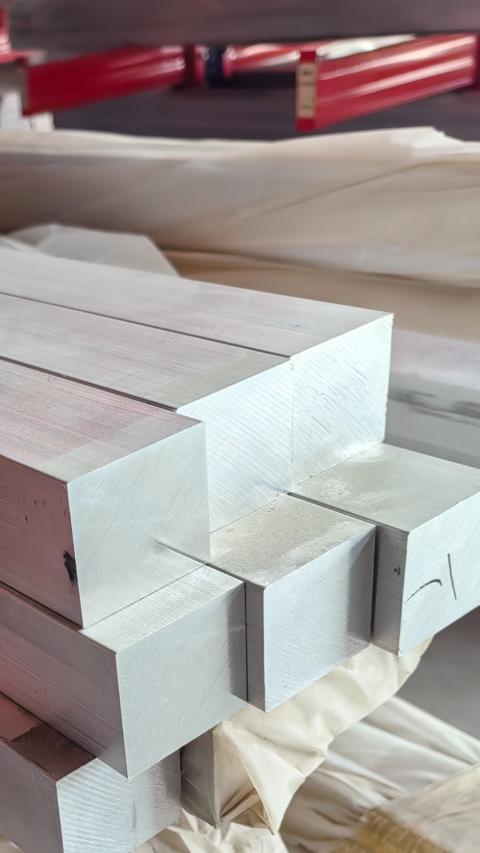
Billet aluminum is a solid bar, plate, or extrusion of wrought alloy that is CNC machined into the final component. The stock is produced by casting large ingots and then hot-working (extruding, rolling, or forging) to refine and align the grain structure before machining. This sequence removes most casting defects, minimizes internal porosity, and creates a predictable, uniform microstructure ideal for precision automotive parts.
In practice, when I order billet for 6CProto projects, I am buying a pre-worked aluminum product whose mechanical properties are already tightly controlled by the mill. Because the grain is elongated along the rolling or extrusion direction, I can orient critical features—like steering arms or suspension brackets—so that the main stress runs parallel to the grain for better fatigue behavior.
Rather than depending on the geometry of a mold, the engineer defines the geometry in CAD and lets the billet exist only as raw “material allowance” around the final part. This is why billet is so popular for custom car parts: you can integrate complex pockets, fillets, and wall transitions that would be cumbersome or impossible in a traditional casting, while still enjoying the stability of a wrought microstructure.
At 6CProto, we usually specify 6061‑T6 or 7075‑T6 billet for structural automotive components because the datasheets are well known and the fatigue performance is repeatable from batch to batch when sourced from reputable mills. For customers in aerospace or motorsport, that predictability is as important as the absolute strength value.
How is cast aluminum made and why does it tend to have more porosity?
Cast aluminum is created by melting alloy ingots, pouring the liquid metal into a mold, and allowing it to solidify into near-net shape. During this process, gas absorption (particularly hydrogen) and solidification shrinkage can create internal voids and micropores inside the casting. Even with good foundry practice, some level of porosity is common, especially in complex or thin-walled geometries.
From a factory-floor standpoint, I see three recurring porosity drivers in cast automotive housings: turbulence as molten metal rushes through the gating system, gas pick-up from overly hot or poorly degassed melt, and shrinkage where sections solidify unevenly and draw metal away from thicker zones. Each factor leaves voids that you only fully appreciate after X-ray or aggressive machining cuts into them.
Foundries fight these issues with degassing (argon or nitrogen injection), optimized gating and risers, chills, and tightly controlled pouring temperatures. These techniques can reduce porosity, but they rarely eliminate it entirely. The result is that some cast parts will be structurally excellent, while others from the same run may hide local weak spots that only appear under high-stress or fatigue conditions.
In cost-sensitive automotive components, robust design and safety factors compensate for that statistical variability, which is acceptable for engine blocks or gearbox housings but much less desirable for small, highly loaded adapters or suspension knuckles. This is why 6CProto often steers customers toward billet or forgings for such safety-critical parts despite the higher unit cost.
Why does billet aluminum usually show better fatigue resistance than cast aluminum?
Billet aluminum usually delivers better fatigue resistance because its wrought microstructure has fewer defects, smaller and more uniform grains, and almost no large internal porosity. Cyclic stresses distribute more evenly through this refined structure, slowing crack initiation and growth. In contrast, pores, inclusions, and coarse grains in castings become natural crack starters that reduce fatigue life.
From experience, when we test cast vs billet versions of the same geometry on a rotating bending or torsion rig, the cast part often fails first at an internal defect that coincides with a local stress concentration—such as a fillet or threaded hole. The billet part, machined from clean material, tends to initiate cracks at the surface instead, which you can more easily control through polishing and design.
Wrought alloys like 6061‑T6 or 7075‑T6 billets have published fatigue strengths at 10⁷ cycles that are significantly higher than those of typical casting alloys such as A356 or A380. As a rule of thumb, forged or billets based on high-strength wrought alloys can achieve 3–5 times the fatigue life of cast equivalents under the same stress range when the geometry is comparable.
This is why in motorsport and performance street builds, we prefer billet for steering, braking, and suspension components where unpredictable fatigue failure is unacceptable. Even if the static loads seem modest, the repetitive load cycles over years of use turn micro-defects in cast parts into macro cracks; billet simply offers a larger fatigue safety window in real-world driving.
How do grain structure and alignment differ between billet, forged, and cast aluminum?
Grain structure in cast aluminum is generally equiaxed and randomly oriented, with grain size depending on cooling rate and alloy chemistry. In billet (extruded or rolled) material, grains are elongated and aligned along the working direction, which improves strength and fatigue behavior along that axis. Forged aluminum takes this further, with grain flow intentionally wrapped around the part’s geometry.
During hot working, dislocations multiply and grains elongate, and subsequent heat treatment refines them into a finer microstructure. When I review metallographic cross-sections from suppliers, wrought billet shows uniform, fine grains with minimal inclusions, while high-quality forgings show grains curving around holes and contours—like wood grain following the shape of a branch—to resist tearing.
By contrast, castings solidify from the mold walls inward, often forming dendritic structures with segregated phases and coarser grains in thicker sections. These variations create local differences in mechanical properties, making finite-element simulations less predictive unless you model them explicitly or test heavily. That variability is exactly what billet and forged stock are designed to reduce.
For critical custom car parts, I treat grain direction as a design variable: orienting extruded billet such that the primary load path runs along the grain, or specifying forgings that align grain flow around the highest-stress features. This is one of the subtle, “non-commodity” optimizations we routinely apply at 6CProto for customers chasing both weight reduction and reliability.
Which grain structure type best supports high-cycle fatigue in automotive components?
Fine, well-aligned grains in wrought or forged aluminum provide the best support for high-cycle fatigue in typical automotive load cases. They distribute stresses and impede crack propagation more effectively than the coarse, random grains found in most castings, especially when combined with smooth surface finishes and generous fillets at stress concentrations.
In high-cycle fatigue, small imperfections matter far more than ultimate tensile strength on a datasheet. I’ve seen components with slightly lower static strength but superior microstructure outlast “stronger” alloys whose grains and inclusions were poorly controlled. This is why forging plus correct heat treatment is still the gold standard in racing for arms, hubs, and connecting rods.
If budget or lead time forces us to choose between cast and billet for long-life suspension parts, we almost always push for billet and then fine-tune the machining strategy: multi-axis tool paths to avoid cutter marks across primary stress paths, bead blasting or polishing to remove micro-notches, and shot peening where appropriate to introduce compressive surface stresses.
Conversely, we reserve cast structures for components dominated by static or low-cycle loads—such as housings, covers, or brackets—where the random grain orientation and slight porosity are less critical. Even then, we pay close attention to wall transitions and ribs to keep stress ranges low during vibration and thermal cycling.
Grain structure and process comparison
Why do billet parts tend to show “zero” internal porosity compared to die-cast parts?
Billet parts are machined from wrought stock that has already been consolidated and worked to close voids and segregations formed during the original ingot casting. The combination of hot working and subsequent heat treatment drastically reduces the size and number of internal pores, so any remaining defects are typically microscopic and statistically insignificant for most CNC-machined geometries.
In contrast, die-cast parts are the direct product of molten metal solidifying inside relatively thin-walled molds at high filling speeds. That process can trap gas bubbles and create shrinkage cavities that are frozen into the final shape. Even with modern degassing, vacuum systems, and optimized gating, castings often show detectable porosity under X-ray, CT, or after aggressive machining cuts.
From the machining side at 6CProto, I can often tell if a block is cast or wrought simply by the consistency of chips and tool load. Billet machines with a predictable, uniform resistance; cast aluminum sometimes exhibits localized “soft” spots or tool load changes when you hit micro porosity or segregated phases. That inconsistency is a red flag for highly loaded, fatigue-sensitive components.
When customers ask for “zero porosity,” what they really want is “no porosity of a size and location that affects performance.” For that goal, wrought billet is an excellent starting point, especially when combined with ultrasonic inspection for large sections and good process control on the CNC side to avoid introducing new defects, such as chatter or burr-induced stress risers.
How does the choice of aluminum alloy (6061, 7075, A356, A380) change real-world performance?
Alloy selection strongly influences strength, corrosion resistance, machinability, and cost, even before you consider billet vs casting. Wrought alloys like 6061‑T6 balance strength and toughness with excellent machinability, while 7075‑T6 offers much higher strength and fatigue resistance at the cost of more demanding corrosion management. Casting alloys such as A356 and A380 are optimized for flow and fill, not ultimate fatigue performance.
In our 6CProto projects, 6061‑T6 billet is the default for custom car brackets, pedal assemblies, and steering components where the environment is relatively benign and loads are moderate but cyclic. When weight and stiffness drive the design—like for motorsport uprights, tie rods, or subframe connectors—we often step up to 7075‑T6 billet with carefully designed corrosion protection and inspection intervals.
For cast parts, A356 (especially in heat-treated T6 condition) is common in wheels and structural housings because it offers a good compromise between castability and mechanical performance. A380, frequently used in high-pressure die casting, is excellent for complex housings but has lower ductility and reduced fatigue strength compared with high-end wrought alloys, making it a cautious choice for structural retrofits.
Using a high-grade alloy in a poor process is as risky as using a poor alloy in a good process. A 7075 billet with deep machining marks, sharp corners, or unrelieved stress paths can still fail prematurely, while a carefully designed and inspected A356 casting may serve safely for decades in the right role. That’s why the process–alloy–geometry triad needs to be considered as a whole, not in isolation.
Which aluminum process is best for critical custom car components?
For safety-critical custom car components subjected to high cyclic loads—like steering, suspension links, and drivetrain adapters—billet or forged aluminum is usually the best choice. These processes offer superior microstructural consistency, higher fatigue strength, and reduced risk from hidden porosity compared with typical die-cast parts, especially in small-batch, customized production.
In my experience, the hierarchy often looks like this:
-
Forged aluminum for parts where you can justify tooling and volumes: control arms, hubs, knuckles, and high-load connectors.
-
Billet aluminum for one-offs, low-volume motorsport parts, and where extreme design freedom or rapid iteration is needed.
-
Cast aluminum for housings, covers, and non-critical brackets, or where complex internal cavities trump fatigue performance.
This is why 6CProto frequently proposes multi-step strategies: starting with billet prototypes to tune the design under track conditions, then migrating to forgings if the volume and business case support a dedicated tool. That path preserves performance while gradually reducing part cost as production scales.
Process vs application guide
How should designers think about porosity, safety factors, and inspection for cast vs billet parts?
Designers should treat porosity as a probabilistic weakening of a region, especially in cast parts where location and size are difficult to predict. That means using higher safety factors, larger fillet radii, and conservative stress limits for cast structures subject to significant cyclic loading. For billet parts, you can typically work closer to the published material fatigue limits due to reduced defect density.
In a practical workflow, we at 6CProto often apply separate design allowables: one set for castings, derated relative to their tensile strength, and another for wrought billet or forged components. Where possible, we back this up with non-destructive testing (X-ray, dye penetrant, ultrasonic) for first-article castings and critical production lots, particularly for racing or aerospace-adjacent applications.
Regardless of process, design for inspectability. For example, avoid burying critical fillets behind inaccessible geometry, and provide flat lands or lightening pockets where cracks will be visible early. Billet parts lend themselves well to such design details because CNC machining can easily introduce shallow inspection pockets and chamfers without mold complexity penalties.
When a customer insists on using cast components in high-risk locations to save cost, I document the assumptions, load spectra, and recommended inspection intervals. That transparency is part of engineering ethics and also aligns with how professional race teams manage component life, often retiring stressed cast parts after a fixed number of hours despite no visible damage.
Why is billet aluminum favored for custom car parts, UTV upgrades, and motorsport components?
Billet aluminum is favored because it combines structural reliability with design freedom and small-batch economics. CNC machining from billet allows intricate shapes, weight-optimized pockets, and tight tolerances without the upfront tooling cost and lead time of casting or forging, while still providing superior fatigue performance and minimal porosity for critical automotive parts.
From a tuner or race shop perspective, billet is the fastest path from CAD to track. You can iterate a suspension arm or diff mount in days, validate it at the circuit, then adjust geometry or stiffness with only CAM changes. That loop is almost impossible with cast parts, where each geometry change implies new tooling or extensive hand rework.
Visually, billet components also signal quality to enthusiasts: the crisp machining marks, chamfered edges, and anodized finishes stand out in an engine bay or under a chassis. While aesthetics do not equal engineering excellence, the same attention to surface quality that produces a beautiful finish also improves fatigue resistance by eliminating sharp tool marks and burrs.
At 6CProto, we routinely support UTV and performance car brands with billet control arms, tie rods, portal boxes, and steering components that need to survive brutal off-road and track conditions. The combination of tailored grain direction, optimized machining, and controlled surface treatments gives those parts a performance envelope that low-pressure or high-pressure die castings rarely match.
What Decides the Answer: Grain Structure, Porosity, and Fatigue Duty
Billet is not stronger than cast aluminium in every respect, and the difference that actually matters is not the strength number on a datasheet but the internal structure the part is made of. The shop’s comparison sets the three processes side by side: cast material solidifies with a random, dendritic grain structure and a medium-to-high porosity risk, which leaves it low-to-medium in fatigue performance; billet is rolled or extruded, so the grains are aligned and porosity is very low, giving medium-to-high fatigue performance; and a forging is better again, because the material flow follows the geometry of the part and porosity is similarly very low, with high fatigue performance.
The scale of that difference is what should drive the specification. As a working rule of thumb, forged or billet parts in high-strength wrought alloys can reach three to five times the fatigue life of a cast equivalent under the same stress range, when the geometry allows it. That single ratio explains the component-level guidance the shop gives: steering knuckles and suspension arms go to forged or billet stock because the fatigue duty is high and the failure is safety-critical; driveshaft adapters suit billet, where the stress is localised and the volume is low; engine and gearbox housings stay cast, because the geometry has complex internal cavities and the fatigue duty is moderate; and pedal boxes and brackets can be billet or formed depending on shape. The comparison and the component guide come from the shop’s article on billet versus cast aluminium.
How to Specify and Verify It
Once the process is chosen, the purchase order should carry the evidence that goes with it. For billet and forged parts, ask for the material certificate naming alloy and temper — 6061-T6 and 7075-T6 are the usual structural choices, and the temper is part of the specification rather than a detail; and for a casting, ask how porosity was controlled and checked, with the inspection method named rather than a general statement of quality. Two boundary conditions belong in the same conversation: the fatigue advantage is only realised where the geometry supports it, since a sharp internal corner will start a crack in billet stock as readily as in a casting; and machined-from-solid removes the porosity question but changes the cost curve, which is why the volume forecast belongs alongside the material decision rather than in a separate conversation.
6CProto Expert Views
“When we tear down failed parts for customers, we almost always see the same story: cast components crack from hidden pores or coarse microstructure, while billet failures start at obvious surface damage or overload. That’s why, for anything between the steering wheel and the tire patch, I treat billet or forged aluminum as the default—and only ‘downgrade’ to cast when geometry and cost leave no alternative.” – 6CProto Engineering Team
How can 6CProto help you choose between billet and cast aluminum for your project?
6CProto can help by analyzing your CAD, loading conditions, and production volumes to recommend the most suitable combination of process, alloy, and geometry. For low- to medium-volume performance and motorsport parts, we often propose billet CNC machining first, then transition to forgings or optimized castings once the design stabilizes and demand justifies tooling investment.
Our engineers routinely apply DFM insights that go beyond generic guidelines: adjusting wall transitions to reduce hot spots in castings, orienting billet grain relative to load paths, and specifying post-machining treatments like shot peening or hard anodizing where they deliver real-world fatigue benefits. Those nuances are the difference between “nice-looking” parts and ones that survive seasons of abuse.
Because 6CProto runs CNC machining, injection molding, 3D printing, and sheet metal under one roof, we can compare process options objectively, not just push the machine we own. For a custom car builder in the development stage, that means getting a frank conversation about risk, cost, and timelines instead of a one-size-fits-all answer.
If you are unsure whether your next control arm, adapter plate, or knuckle should be cast, machined from billet, or forged, our free DFM review will highlight stress hot spots, porosity-sensitive regions, and feasible process trade-offs before you commit budget. That approach embodies how 6CProto blends speed with rigorous engineering for global customers.
Conclusion: What are the key takeaways for choosing between billet and cast aluminum?
Cast aluminum is powerful for complex, cost-sensitive components but brings inherent porosity and microstructural variability that shorten fatigue life. Billet aluminum, machined from wrought stock, offers cleaner internal structure, superior grain alignment, and higher fatigue reliability, making it ideal for custom car, UTV, and motorsport parts where failure is not an option.
Engineers should treat process selection as a strategic decision: use castings for housings and low-stress structures, billet for high-load, low-volume components, and forgings when volumes and safety requirements justify dedicated tooling. Pair that with intelligent alloy choices, surface treatments, and realistic inspection intervals to build in safety rather than assuming datasheet values will save a marginal design.
Partnering with a specialist like 6CProto ensures that these decisions are grounded in real factory-floor feedback and test results, not just theoretical comparisons. By aligning design goals, loading, and manufacturing process early, you can unlock lighter, stronger, and more reliable aluminum components across your vehicle program.
FAQ
Is billet aluminum actually stronger than cast aluminum?
In practice the difference is not raw strength but fatigue behaviour. Billet is wrought stock with aligned grains and very low porosity, while a casting solidifies with a random dendritic structure and a medium-to-high porosity risk. Under the same stress range, forged or billet parts in high-strength alloys can reach three to five times the fatigue life of a cast equivalent — which is what matters in a part that is loaded in cycles rather than once.
What are the disadvantages of billet aluminum?
Cost and geometry. Billet is machined from solid, so material is removed rather than shaped, and the price follows the stock size and the machining time; complex internal cavities that a casting forms for free are expensive or impossible from a block. Where the geometry is genuinely three-dimensional and the fatigue duty is moderate, a casting is the better process on both counts.
Why do castings have more porosity than billet?
Because they solidify in a mould rather than being worked. Liquid metal shrinks as it freezes, and the mould walls and the cooling pattern determine where the last material to freeze is and whether gas or shrinkage leaves voids behind. Billet is rolled or extruded from a cast ingot, and that working closes most of the porosity and aligns the grain in one direction.
Which aluminum alloy is best for high-stress car parts?
For structural parts machined from solid, 6061-T6 and 7075-T6 are the usual wrought choices, and the temper is part of the specification because it sets the strength. Cast components are typically specified in casting alloys such as A356 or A380, where the design is driven by the shape and the porosity control rather than by tensile strength alone. Matching the alloy to the process matters more than ranking the alloys.
How should porosity in a casting be verified?
Ask for the process control and the inspection method rather than a general quality statement: how the gating and cooling were designed to keep the last-to-freeze material out of the load path, and whether the parts were checked by radiography, dye penetrant or sectioning, with the acceptance criteria named. A casting quote that cannot describe its porosity control is quoting a shape, not a component.