

A buyer accepts a supplier’s quote for machined parts “delivered to Chicago,” and the shipment arrives at the airport with a customs bill that no one expected: the supplier quoted EXW pricing, the forwarder added freight, and the buyer now owes duties and clearance fees that were never in the comparison. Incoterms are the three-letter shorthand that prevents exactly this surprise: they define where cost and risk transfer between buyer and seller, who arranges freight, and who handles export and import clearance. For custom manufacturing orders, the chosen term is a commercial decision with real money attached — and it should be written into the purchase order, not assumed from the word “delivered.”

Incoterms divide cost and risk; they do not cover quality
Incoterms cover delivery: where goods are handed over, who bears transport cost, and where risk passes from seller to buyer. They do not cover payment terms, product specifications, quality, or intellectual property. A buyer who expects the Incoterm to protect against quality problems will be disappointed; that protection belongs in the purchase agreement and the inspection terms. The rules are published by the International Chamber of Commerce, and the current edition, Incoterms 2020, has eleven rules; manufacturing buyers mostly meet a handful.
Each rule is a complete division of tasks and costs, so “FOB” without a named place is incomplete: the rule should read “Incoterms® 2020, FOB Shanghai port” with the precise terminal or address, not a city name alone. The Incoterm plus the named place is the contract; the three letters alone are a conversation starter.
EXW, FOB, and DDP transfer work at different points
Under EXW (Ex Works), the buyer collects the goods at the seller’s premises and takes over loading, carriage, and both export and import clearance from there; the seller still owes packing appropriate to the sales contract and the usual mode of transport. Under FOB (Free on Board), the seller delivers the goods onto the vessel named by the buyer, and cost and risk transfer at the ship. For containerized cargo handed to a carrier or container terminal, FCA (Free Carrier) is usually the more accurate Incoterms 2020 rule than FOB. Under DDP (Delivered Duty Paid), the seller carries the goods to the buyer’s named place, cleared for import — where the seller can legally act as importer in the destination country. The price difference between EXW and DDP is real money, and the question is who is better positioned to manage each step.
| Term | Seller handles | Buyer handles | Risk transfers |
|---|---|---|---|
| EXW | Goods packed per contract, made available at premises | Loading, collection, main carriage, export and import clearance | At the seller’s premises |
| FOB (named port) | Export clearance and delivery to vessel | Ocean freight, import clearance, destination | When goods are on board the vessel |
| FCA (named place) | Export clearance and delivery to carrier or terminal | Main carriage and import clearance from the named place | When goods are handed to the carrier |
| DAP (named place) | Delivery to named place, not cleared | Import clearance and duties | When goods are ready for unloading |
| DDP | Delivery cleared for import, duties paid | Unloading at destination | At the buyer’s named place |
The table is the decision map: each column answers “who pays and who carries risk at this step?” If the answer is unclear for your shipment, the term is not specific enough yet.
Prototypes and production often justify different terms
Usually yes, because the shipment profiles differ. A single prototype moving by express courier is often simplest with a door-to-door term that includes clearance, because neither party wants to coordinate customs for one small box. A production order moving by ocean freight is a different calculation: the buyer may prefer FOB and control the freight, or may prefer DDP to avoid dealing with a foreign export process. Consider the shipment value, the destination, the frequency of shipments, and which side has reliable freight partners before choosing.
Frequency changes the math. One DDP shipment with a reliable forwarder may be worth the higher price; twenty DDP shipments per year may hide significant markup that a buyer could remove by managing freight directly. Ask the supplier for a price breakdown by term when the volume is meaningful, because the difference between the terms is often the supplier’s freight cost plus margin.
Customs roles and documents follow the term
Export and import clearance follow the term. Under EXW the buyer arranges both; under FOB the seller clears export and the buyer handles import; under DDP the seller handles both and pays import duties. Duties and taxes are often the part buyers underestimate: a “delivered” price that is not duty paid can still surprise the importer at arrival. Confirm which term includes duties, and confirm whether the quoted price includes packaging for the transport mode, because manufacturing parts need proper export packing that is easy to overlook.
Documentation is part of clearance: commercial invoice, packing list, bill of lading or airway bill, and certificates when the goods require them. A machined part with a material certificate may need that document at customs or at the buyer’s quality gate; agree in advance who provides which document and in what format. The Incoterm defines the transfer of goods, but the documents travel with the deal, not with the goods.
What should you ask before agreeing to a term?
Ask who arranges each step, who pays each cost, where risk transfers, and what happens on delay or damage. Ask whether the price includes export packing, documentation, and insurance, because none of those are automatic. Ask how the supplier will notify you when risk transfers, especially for sea shipments where the bill of lading is the record. Ask about insurance: under EXW, FCA, FOB, DAP, and DDP the rule itself does not require either party to arrange cargo insurance, so an uninsured shipment is a risk decision someone should make consciously. CIF and CIP are the exceptions — both require the seller to obtain insurance, although the required coverage and level differ.
Then write the rule version and the precise named place into the purchase order — for example “Incoterms® 2020, FOB Shanghai, [terminal or berth]” or “Incoterms® 2020, DDP, [complete warehouse address]” — because a city name alone still leaves the transfer point open to argument. When you compare supplier quotes, ask for the full Incoterm line on each quotation; otherwise you are comparing prices that include different amounts of freight, clearance, and risk.
Currency and payment terms interact with Incoterms in ways that first-time importers underestimate. A quote in the seller’s currency shifts exchange-rate risk to the buyer, and the effective cost changes between quote and payment; a quote in the buyer’s currency shifts the risk to the seller, who may price it in. The Incoterm defines who pays for freight and duties, but it does not define the currency of payment or the timing of payment, so both belong in the purchase order as separate clauses. Payment terms also affect leverage when goods are delayed or damaged: a buyer who has paid 100 percent in advance has less room to negotiate a claim than one who has paid a deposit with the balance on shipping documents. Ask the supplier for the payment schedule that matches the Incoterm, and check whether the documents needed for payment — bill of lading, invoice, packing list, certificates — are the same documents needed for clearance and for your own incoming inspection. Aligning the commercial terms, the payment milestones, and the document list in one purchase order is the fastest way to remove surprises from an international order.
Frequently asked questions
Is DDP always the best term for a first-time importer?
DDP is convenient for a first-time importer because the seller coordinates most of the process, but it is not always the best value and it does not remove the buyer’s responsibility to understand the goods being imported. The seller’s DDP price includes its freight and clearance costs plus margin, and the buyer still owns the quality and compliance risk. Use DDP for convenience on small or occasional shipments and review the cost breakdown as volume grows.
Who is responsible if the goods are damaged in transit?
The answer follows the Incoterm and the insurance, not the damage itself. If risk has transferred to the buyer, the buyer claims against its own insurance or the carrier; if risk is still with the seller, the seller handles the claim. Under EXW, FCA, FOB, DAP, and DDP no party is required to insure by the rule itself, while CIF and CIP place an insurance obligation on the seller — so the practical rule is: whoever carries the risk should carry insurance, and the coverage should be agreed before shipment, not after damage.
Do Incoterms apply to air freight?
Yes, with a caveat: FOB and its sea-only relatives are designed for vessel delivery, so air freight typically uses EXW, FCA, DAP, or DDP. FCA (Free Carrier) is the air-friendly counterpart that transfers risk when the goods are handed to the carrier named by the buyer. Choose the term that matches the transport mode, because using a sea term on air freight creates confusion about the transfer point.
Conclusion
Incoterms divide the cost and risk of delivery between buyer and seller, and the right term depends on the shipment size, frequency, destination, and who can manage each step best. Write the term with the named place into the purchase order, confirm duties and packaging in the price, and compare supplier quotes on the same basis. The three letters cost nothing to get right and can cost a full shipment value to get wrong.
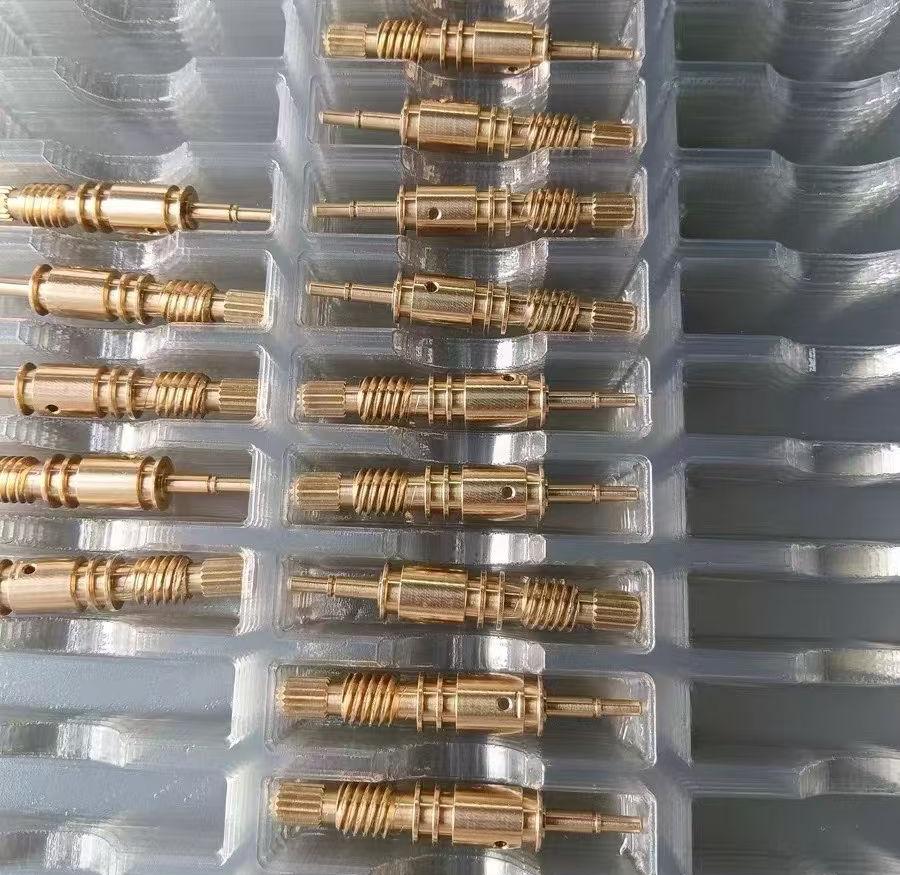
If you are comparing manufacturing quotes or planning your first import shipment, ask each supplier to quote the same term with the same named place, and request the export packing and documentation list in writing. The request for quotation page on this site is a good place to start the comparison with the commercial terms stated up front.