

Micro-milling of complex molds lets engineers cut sub‑millimeter channels with 50‑micron end mills at ultra‑high spindle speeds, achieving excellent dimensional control and low surface roughness for microfluidic diagnostic chips. By combining ultra precision toolpaths, high‑stability machines, and careful tool selection, you can prototype and scale medical diagnostic platforms with reliable wetting, mixing, and capillary performance.
Last updated:
What is micro-milling for microfluidic diagnostic chip molds?
Micro-milling for microfluidic diagnostic chip molds is an ultra-precise CNC process that uses tiny end mills—often 50–200 microns—to cut micro-scale channels and features into mold inserts. These molds are then used for injection molding or hot embossing polymers. The result is high-fidelity microfluidic channels that meet tight medical diagnostic tolerances.
In the lab, you can machine channels directly into PMMA or COC, but for scalable production you typically create a hardened steel or nickel–phosphor mold insert. Micro-milling shapes the negative geometry: channels, mixing chambers, valves, and capillary stops, all with depths and widths under 200 µm. That mold then replicates the geometry in thousands or millions of disposable chips.
At 6CProto, we treat a micro fluidic chip mold like an optical component, not just a metal block. The same care we’d apply to a lens mold—thermal stability, toolpath smoothing, and vibration control—carries over here, because surface quality and channel uniformity directly drive wetting behavior, capillary flow, and ultimately diagnostic accuracy in the field.
How do 50‑micron end mills and extreme RPMs enable sub-millimeter channel machining?
50‑micron end mills at extreme RPMs enable sub‑millimeter channel machining by maintaining a controllable chip load at tiny feed rates while minimizing cutting forces that would snap larger tools. High-speed spindles (often 60,000–120,000 rpm) and ultra precision toolpaths produce smooth walls and floors, with roughness low enough for reliable microfluidic flow and optical detection.
At this scale, conventional milling rules break down. A 50 µm carbide tool cutting steel may run at 80,000 rpm with feeds measured in mm/min, and radial engagement below 10 µm. If you push too hard, the tool deflects or fractures; too soft, and it rubs and work-hardens the surface. We tune these parameters based on actual chip thickness vs theoretical chip thickness, not just textbook formulas.
In my experience at 6CProto, the smallest tools are unforgiving of machine instability. A warm spindle, slight runout, or an unbalanced holder shows up instantly as chatter bands or broken tools. That’s why we pair these cutters with high-speed, low-runout spindles, air/oil mist or minimum-quantity lubrication, and carefully filtered coolants that won’t damage fine features or contaminate medical surfaces.
What ultra precision toolpath strategies are used for smooth microfluidic channels?
Ultra precision toolpath strategies for smooth microfluidic channels use high-speed, constant-load toolpaths with small stepovers, rounded corners, and minimized direction changes. Dynamic or trochoidal paths maintain consistent chip load, while spiral or morphing contours avoid abrupt accelerations that cause chatter. Finishing passes use ultra-light radial cuts to reach target roughness and dimensional tolerance.
In CAM, I rarely use simple pocketing for micro channels. Instead, I combine adaptive clearing for roughing with rest machining and dedicated finishing toolpaths aligned with the channel geometry. Entry moves are helical or ramp-style to avoid plunging a 50 µm tool straight into the material. Corner smoothing and tolerance control reduce tiny “faceting” errors that become visible under microscopy.
For critical diagnostic features—like optical interrogation zones or capillary valves—we often add a dedicated two-step finishing: one pass along the length of the channel and a second orthogonal or spiral pass to knock down any remaining cusps. 6CProto also simulates machine dynamics, not just geometry, so that our ultra precision toolpath CNC programs respect the real acceleration and jerk limits of the machine.
Typical toolpath and parameter choices for micro-channel milling
Why are material choice and heat management critical when micro-milling diagnostic molds?
Material choice and heat management are critical because thermal expansion, heat-affected zones, and hardness directly affect tool life, channel accuracy, and surface quality. Stable tool steels or nickel–phosphor plated substrates hold tolerances better at elevated spindle speeds, while controlled cooling prevents micro-cracking and distortion of delicate features.
If you choose a soft mold material, you risk burrs and rapid wear, which distort channel edges after relatively few molding cycles. Too hard or poorly heat-treated steels chip and generate unpredictable cutting forces at micro scale. For many microfluidic molds, we use fine-grain, high-hardness tool steels or electroformed nickel with tightly controlled heat treatment to balance machinability and life.
On the shop floor, I watch spindle load and temperature trends closely. A slight rise in load on a 50 µm tool often signals wear long before catastrophic failure. At 6CProto, we use chilled coolants or controlled shop temperature where required, and we schedule finishing passes after the machine has thermally stabilized to keep channel depths and widths within microns across the plate.
How can micro-milled molds hold the tight tolerances needed for microfluidic channels?
Micro-milled molds hold tight tolerances by combining ultra stiff machines, high-resolution feedback, calibrated tool setters, and in-process metrology. Frequent tool length and diameter compensation, thermal compensation, and controlled environmental conditions help keep channel width, depth, and alignment within a few microns, even across multi-cavity mold inserts.
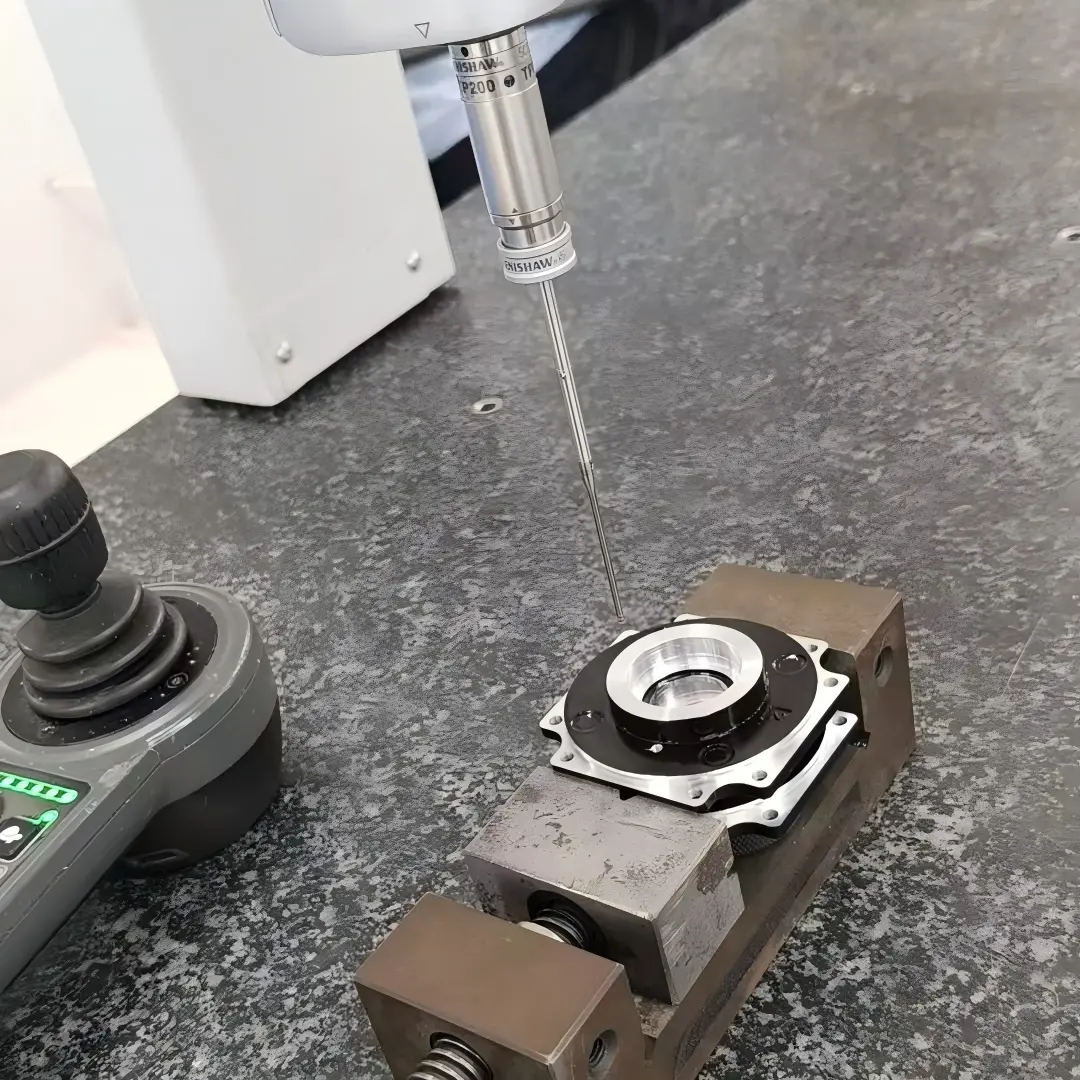
We treat the mold as a metrology artifact. Before cutting, we characterize spindle runout and fixture flatness. During machining, we compensate tool wear based on test cuts or on-machine probing of witness features. After cutting, we use optical CMMs or non-contact microscopes to validate channel cross-sections and depths. Adjustments from those measurements feed back into the toolpath and offset strategy.
6CProto often builds a “trial mold” first, sized slightly oversize, then iteratively trims channels down into tolerance based on measured data. I’ve seen instances where simply reordering operations—roughing, stress-relief heat treatment, then finishing—cut dimensional drift in half. For medical diagnostics prototyping, this iterative, data-driven approach is often the fastest path to a mold that can be trusted for clinical validation builds.
Key tolerance factors for microfluidic diagnostic molds
What role does surface roughness play in microfluidic diagnostic performance?
Surface roughness plays a major role in microfluidic diagnostic performance by affecting wetting, capillary flow, mixing, and optical readout. Smooth channel walls reduce unintended capillary pinning and bubble trapping, while controlled micro-texture can improve mixing in deliberate zones. Ultra-low Ra in optical windows ensures clean, repeatable absorbance or fluorescence measurement.
Under the microscope, a channel that looks “machined fine” to the naked eye can show directional milling marks that bias fluid flow or trap cells and reagents. Too rough, and you get unpredictable wetting fronts and variable assay times; too smooth in mixing regions, and reagents may not blend efficiently. The best designs balance roughness by region.
At 6CProto, we correlate measured Ra and profile data with optical scans of filled channels. I’ve seen cases where a small change in finishing strategy—changing the step-over direction relative to flow, or adding a final polishing pass—reduced bubble defects dramatically. When customers share their assay timing and imaging data, we can tune surface finishing specifically to their chemistry rather than aiming for an arbitrary Ra number.
How can engineers design micro fluidic chip molds that are manufacturable with micro-milling?
Engineers can design micro fluidic chip molds for manufacturability by respecting minimum tool diameters, avoiding needless sharp internal corners, and limiting extreme aspect ratios. Channel widths, fillet radii, and depths should be aligned with available micro tools and machine capability. Design-for-manufacturing (DFM) early in the process prevents fragile features and enables stable toolpaths.
For a 50 µm end mill, asking for a 30 µm internal radius is unrealistic; a 60–75 µm corner radius is far more robust and reduces machining time and tool breakage. Aspect ratios above 10:1 in deep channels may require stepped machining or alternative processes. Venting and ejector pin locations should be planned so they do not intersect critical microfluidic paths.
When I review CAD for 6CProto customers, I often suggest subtle changes: slightly opening a channel width, adding small drafting angles in mold cavities, or redistributing functional features to minimize ultra-deep cuts. These tweaks rarely affect fluidic function but dramatically increase process stability and yield—especially important when you’re racing to get a medical diagnostics prototyping program into clinical trials.
Why is micro-milling a strong option for rapid prototyping of medical diagnostic chips?
Micro-milling is a strong option for rapid prototyping of medical diagnostic chips because it can produce functional molds or direct-milled chips in days, without photomasks or cleanroom processes. Design changes are implemented directly in CAM and CNC code, enabling fast iteration of channel layouts, mixing structures, and detection zones ahead of high-volume polymer molding.
Compared to lithography-based processes, micro-milling offers high flexibility in channel depth variation and 3D features like ramps, wells, and complex junctions. That flexibility is valuable when you are co-optimizing fluidics and assay chemistry and need to adjust features after initial testing. For moderate runs, you can even use micro-milled PMMA or COC chips as final parts.
At 6CProto, we frequently run cycles like this: initial concept in direct-milled polymer, second iteration in a soft metal mold for short-run molding, and then a hardened micro-milled mold for pilot builds. My experience is that this staged approach lets medical teams experiment with geometry while still converging quickly on a tool that can support regulatory submissions and early commercialization.
How the Mould Is Measured Before It Cuts a Chip
On a microfluidic mould the channel is the product, and a channel that is dimensionally right but rough will still change how the chip behaves. That is why verification has to be planned with the tool rather than after it: a 50 µm end mill does not leave much room to correct a feature once it has been cut, and the same tool that machines the channel is the one whose wear has to be tracked across the run.
The measurement plan follows from the features that matter. Channel width and depth are dimensional checks; the floor finish is a roughness measurement rather than a dimensional one, and it needs an instrument suited to the scale — a stylus profilometer with a fine enough tip or an optical method, not a general-purpose roughness tester with a large cutoff. Wall straightness and the radius at the channel corners are geometry checks, and they are the features most likely to be affected by tool deflection. The discipline of naming the critical-to-function features, fixing the datums and agreeing a sampling plan before the run is the framework the shop sets out for advanced CMM inspection, and it applies to a mould with 50 µm channels exactly as it does to a machined housing.
What to Ask For With a Micro-Milled Mould
Ask for a first-article inspection report that covers the micro-features by name — channel widths, depths, corner radii and the datum scheme they are measured from — rounded out with surface roughness readings taken on the channel floor, because that is the surface the fluid sees. Ask also for the tool-wear record for the run: on a feature this small, a change in the effective cutting edge shows up as a change in channel width before it shows up anywhere else. Two boundary conditions are worth stating before the tool is cut: the tolerance and the surface finish trade against each other, since a finer floor finish usually means a smaller stepover and a longer cycle; and the mould is a step in a production chain, so the acceptance criteria should be agreed with the people who will run the chips, not only with the shop that mills the tool.
Who should be involved when transitioning from micro-milled prototypes to mass-produced diagnostic cartridges?
Transitioning from micro-milled prototypes to mass-produced diagnostic cartridges should involve design engineers, assay scientists, manufacturing engineers, and the moldmaker. Each group contributes different constraints—fluid dynamics, bio-compatibility, process capability, and tooling life. Early cross-functional reviews ensure that what works on a prototype bench can be scaled reliably.
Assay teams may want sharper bends or very narrow constrictions; manufacturing may flag those as risk points for tool life or molding defects. Toolmakers understand how ejector layout, parting lines, and gate locations interact with tiny channels. When these perspectives meet early, you avoid late-stage compromises that affect clinical performance.
At 6CProto, we host joint DFM calls where we bring our CAM and micro-milling specialists directly into discussions with the customer’s biology and device teams. From my side of the table, seeing their assay flow curves and optical requirements changes how we propose gating, venting, and polishing strategies. That collaboration is how you get from “works once in the lab” to “works every time in the field.”
6CProto Expert Views
“When we cut microfluidic molds, we treat every channel like a critical sensor interface, not just a groove. A 5 µm burr or a 20 nm step in surface profile can shift capillary timing enough to fail an assay. Our micro-milling team at 6CProto spends as much time tuning toolpaths and measuring surfaces as they do cutting metal—that’s how you get diagnostic channels that behave identically, lot after lot.”
How does 6CProto support ultra precision micro-milling for diagnostic microfluidic projects?
6CProto supports ultra precision micro-milling by combining high-speed 5‑axis machining centers, micro tool management, and in-house metrology tailored to microfluidic molds. We help customers refine CAD, choose the right mold materials, and define tolerances that match both clinical needs and manufacturing reality, from single prototypes to pre-production runs.
Our process typically starts with a manufacturability review of the micro fluidic chip mold design. We then propose tool sizes, channel strategies, and inspection plans, including microscopic optical scans of channel cross sections and surfaces. Data from these scans feed back into toolpath refinements and, when needed, minor geometry adjustments.
Because 6CProto spans CNC machining, injection molding, and quality inspection under one roof, we can also provide molded test chips from the same micro-milled mold, closing the loop between tool performance and fluidic behavior. From my experience, this vertical integration is what lets diagnostic teams move quickly from CAD to validated, production-realistic hardware.
Conclusion: How should you approach micro-milled mold development for high-precision microfluidic diagnostic chips?
Approach micro-milled mold development by treating channel geometry, surface finish, and metrology as a single integrated system. Design channels that are both fluidically effective and machinable, choose stable mold materials, and rely on ultra precision toolpaths tuned for micro tools and high RPM. Validate everything with detailed optical scans and real assay tests, not just nominal dimensions.
Work with a manufacturer who understands both CNC and diagnostics. When you share assay timing, optical requirements, and expected environments, your partner can tailor machining, polishing, and molding strategies to those realities. 6CProto is structured precisely for this kind of collaboration, helping you turn ambitious microfluidic concepts into reliable diagnostic products ready for scale-up.
FAQ
What is micro-milling for microfluidic diagnostic chip molds?
It is the machining of the channel geometry directly into a mould insert using very small cutters, typically in the tens of microns, at high spindle speeds. It exists because microfluidic features are too small for conventional milling but too precise for most additive processes: a mould machined this way reproduces channels with defined walls, floors and corner radii, and it can be revised in days rather than the weeks a new tool would take.
How are micro-milled channels measured?
In layers, because no single instrument covers everything. Channel width, depth and corner radii are dimensional checks against the datum scheme; the floor finish is a roughness measurement that needs an instrument suited to the scale, such as a fine-tip stylus profilometer or an optical method; and wall straightness is a geometry check that reveals tool deflection. The plan names the critical features and the method for each before the first cut.
What surface roughness do microfluidic channels need?
It depends on the fluid behaviour the chip is designed around, which is why the requirement belongs on the drawing rather than in a general tolerance. What is consistent is that the floor finish is a functional surface: it changes wetting, mixing and optical detection, and a roughness figure quoted without stating the cutoff and the measurement direction is not comparable between a shop and a lab.
Why does tool wear matter more on a micro-milled mould?
Because the tool is a measurable fraction of the feature. A small change in the effective cutting edge on a 50 micron end mill shows up as a change in channel width across the run, long before it would be visible on a conventional part. Tracking tool wear and re-measuring the channel is what keeps the first and last insert in a batch equivalent.
What should be agreed before transitioning a micro-milled prototype to production?
The acceptance criteria, and with whom they are agreed. A mould that satisfies a prototyping brief may not be suited to production if the requirement changes to cycle count, material, or automated inspection. Bringing the people who will run the cartridges into the discussion early is what stops a tool that measures well from becoming a tool that cannot be produced from.