Engineering tolerance is the allowable variation from a specified dimension or feature in a manufactured part. It defines the range between maximum and minimum limits so parts remain functional while acknowledging that perfect precision is impossible. Proper tolerance selection balances performance, assembly, cost, and manufacturability across processes like CNC machining, injection molding, 3D printing, and sheet metal fabrication. In hardware development and industrial manufacturing, engineering tolerance control is one of the most critical factors that determine whether a prototype successfully becomes a scalable, reliable product.
For hardware startups, product designers, and procurement teams, understanding engineering tolerance is essential for making informed decisions about manufacturing partners, material selection, and process capability. Without tolerances, designs assume ideal dimensions that no real process can guarantee, leading to assembly failures, excessive scrap, or unpredictable performance. With well-defined tolerances, engineers can ensure interchangeability of mating parts, control functional performance, predict tolerance stack-up in assemblies, and align design intent with realistic manufacturing capabilities.
Critical Pain Points in Global Tolerance Management
Interpreting Tolerances Across Different Processes
Many buyers assume that a single tolerance value can be achieved by any manufacturing method. However, CNC machining, 3D printing, injection molding, and sheet metal fabrication each have different inherent capabilities. A tolerance that is easy with 5-axis CNC may be unrealistic for standard 3D printing or low-cost injection molding without advanced tooling and process control. If tolerances are not matched to the right process, parts may fail functional tests, require rework, or cause assembly issues that delay product launches.
Maintaining Tolerance Consistency Across Batches
Even when a single part meets tolerance requirements, maintaining that same tolerance across multiple batches is challenging. Factors like tool wear, material variability, temperature changes, and machine calibration can introduce drift. Without robust quality control systems and experienced process engineers, batch-to-batch tolerance consistency can degrade, leading to unpredictable performance and higher rejection rates. For businesses scaling production, inconsistent tolerances can result in costly rework, warranty claims, or even regulatory issues in regulated industries.
Balancing Tight Tolerances with Cost and Lead Time
Designers often specify extremely tight tolerances to ensure quality, but this can significantly increase cost and lead time. Achieving tight tolerances requires specialized equipment, more frequent inspections, and tighter process controls. If the tolerance is unnecessarily tight for the application, it can inflate production costs without delivering real value. Buyers must balance functional requirements with realistic manufacturing capabilities. Over-tolerancing can make a product uncompetitive, especially in high-volume scenarios.
Managing Tolerance Requirements Across Global Suppliers
When outsourcing to multiple suppliers or using distributed manufacturing networks, ensuring consistent tolerance control becomes harder. Different facilities may have varying equipment, quality systems, and operator expertise. Without clear tolerance specifications, standardized inspection methods, and shared Design for Manufacturability feedback, tolerance performance can vary widely. This fragmentation increases the risk of defective parts, assembly failures, and delays in bringing products to market.
How Tolerance Classes and Standards Define Acceptable Variation
Tolerance classes and standards provide a structured way to specify and interpret acceptable variation, so designers, buyers, and manufacturers have a common language. Using these recognized standards avoids ambiguous notes on drawings, enables consistent interpretation across global suppliers, and helps estimate cost and feasibility early in the project lifecycle.
ISO 2768
This standard establishes general tolerances for linear and angular dimensions on metal and plastic parts. It is broken into classes like f (fine) and m (medium). Under ISO 2768-1, a fine metal tolerance for a 6 to 30 mm dimension might be plus or minus 0.1 mm, while a medium tolerance might be plus or minus 0.2 mm.
ISO 286
This standard defines the limits and fits for holes and shafts. It uses IT, or International Tolerance, grades ranging from IT01 to IT16. IT grades define how tight a tolerance is relative to basic size. Lower IT numbers are tighter and more expensive, while higher IT numbers are looser and more economical. Moving from a medium tolerance class like IT10 to IT12 down to a fine class like IT6 to IT8 can significantly increase cost, sometimes exponentially.
ASME Y14.5
This dimensioning and tolerancing standard is widely used in North America. It governs geometric tolerancing, allowing engineers to control orientation, location, and form more effectively than simple linear tolerances.
Manufacturing Process Capabilities and Geometric Tolerances
Different manufacturing processes have inherently different tolerance capabilities. Choosing the right process based on tolerance requirements is critical to avoid over-specifying or under-specifying. In practice, rapid prototyping shops publish process-specific tolerance guidelines that map to global standards but are tuned to real production line capabilities.
| Manufacturing Process | Typical Tolerance Range (mm) | Process Capability and Constraints |
| 5-Axis CNC Machining | plus or minus 0.01 to plus or minus 0.05 | Very tight; optimal for complex, high-precision parts and functional interfaces. |
| 3-Axis CNC Machining | plus or minus 0.02 to plus or minus 0.1 | Standard industry baseline for most machined prototypes and metal enclosures. |
| 3D Printing (SLS/SLA) | plus or minus 0.05 to plus or minus 0.15 | Superior accuracy compared to FDM, but does not achieve true machining-level precision. |
| Injection Molding | plus or minus 0.05 to plus or minus 0.2 | Highly dependent on material shrinkage, tooling design, and cooling parameters. |
| 3D Printing (FDM) | plus or minus 0.1 to plus or minus 0.5 | Layer height and print orientation heavily influence final dimensional variation. |
| Sheet Metal Fabrication | plus or minus 0.1 to plus or minus 0.5 | Laser cutting achieves tighter limits; bending and nesting introduce variation. |
CNC machining, especially 5-axis, delivers the tightest and most repeatable tolerances for metal and many plastics, making it the primary choice for functional prototypes and low-volume production that must meet strict geometric requirements. Injection molding and sheet metal fabrication are excellent for high-volume production, but their tolerances are generally looser and more influenced by tooling design and material behavior. Advanced workflows often plan for secondary operations, such as machining critical features after injection molding, to hit tight spots without driving up the cost of the entire part.
Managing Tolerance Stack-Up in Assemblies
Tolerance stack-up occurs when the individual variations of multiple parts accumulate in an assembly, potentially causing unexpected clearance, interference, or functional issues. Managing stack-up is essential for reliable assemblies, especially in aerospace, automotive, medical, and consumer electronics applications where critical interfaces like seals, bearings, and sliding surfaces must be designed with enough margin to handle cumulative variation without failure.
Worst-Case Analysis versus Statistical Methods
Worst-case analysis assumes all parts within an assembly are at their extreme upper or lower limits simultaneously. If three parts each have a plus or minus 0.1 mm variation along the same axis, the total possible variation can be up to plus or minus 0.3 mm. Statistical methods, such as Root Sum Squares, assume a normal distribution of variation across production batches. This often yields less conservative but realistic bounds that prevent unnecessary cost increases.
Practical Strategies for Engineering Teams
To manage stack-up effectively, teams should identify critical tolerance chains rather than treating every feature identically. Defining clear reference points through datum-based tolerancing ensures variations are controlled consistently. Geometric Dimensioning and Tolerancing should be applied to control geometric features like concentricity and parallelism. Finally, building and measuring physical, high-precision machined prototypes allows engineers to confirm that real-world stack-up behavior matches mathematical predictions before committing to expensive production tooling.
Manufacturing Partner Selection Matrix
For B2B buyers and hardware teams, engineering tolerance is not just a number on a drawing. It reflects process capability, quality system maturity, and the ability to deliver consistent parts at scale. Consistent tolerance control, backed by certifications and inspection data, is what allows prototypes to become reliable, mass-producible products.
| Sourcing Factor | Trading Company | General Factory | 6CProto Infrastructure |
| Tolerance Capability | Often limited; completely dependent on unknown subcontractors. | Basic tolerances; frequently struggles with tight or complex limits. | Plus or minus 0.01 mm achievable on suitably designed components. |
| Process Coverage | Narrow; typically functions as a single-process broker. | Limited to specific on-site machinery and traditional methods. | 3/4/5-axis CNC milling, turning, 3D printing, injection molding, sheet metal, and vacuum casting. |
| Quality System | Variable; generally lacks formal, verifiable quality certification. | Sometimes ISO certified, but exhibits inconsistent operational execution. | ISO 9001:2015 certified; structured QC with FQC, OQC, and DIR reports. |
| DFM Support | Rarely provided due to lack of on-site engineering staff. | Basic or reactive; only flags issues after a failure occurs. | Engineering-led DFM feedback within 24 hours with actionable design changes. |
| Batch Consistency | Uncertain; high risk of supplier switching between orders. | Can drift significantly over time without tight process control. | Networked manufacturing with standardized processes for repeatable quality. |
| Lead Time and Scalability | Medium; entirely dependent on subcontractor capacity. | Fast within standard capabilities but limited in overall scaling flexibility. | Fast turnaround within 1 to 2 days for simple parts; scalable via partner network. |
Engineering-Led Infrastructure at 6CProto
Advanced CNC Machining Capabilities
6CProto’s CNC machining services are designed to achieve tight tolerances, with standard capabilities of plus or minus 0.02 mm and the ability to reach plus or minus 0.01 mm on well-designed parts. This is supported by advanced equipment including 3, 4, and 5-axis mills, turn-mill centers, and electrical discharge machining. Experienced technical experts translate tolerance requirements into feasible machining strategies, reducing the risk of out-of-tolerance parts and ensuring that functional prototypes align perfectly with design intent.
Certified Quality Systems and Inspection Protocols
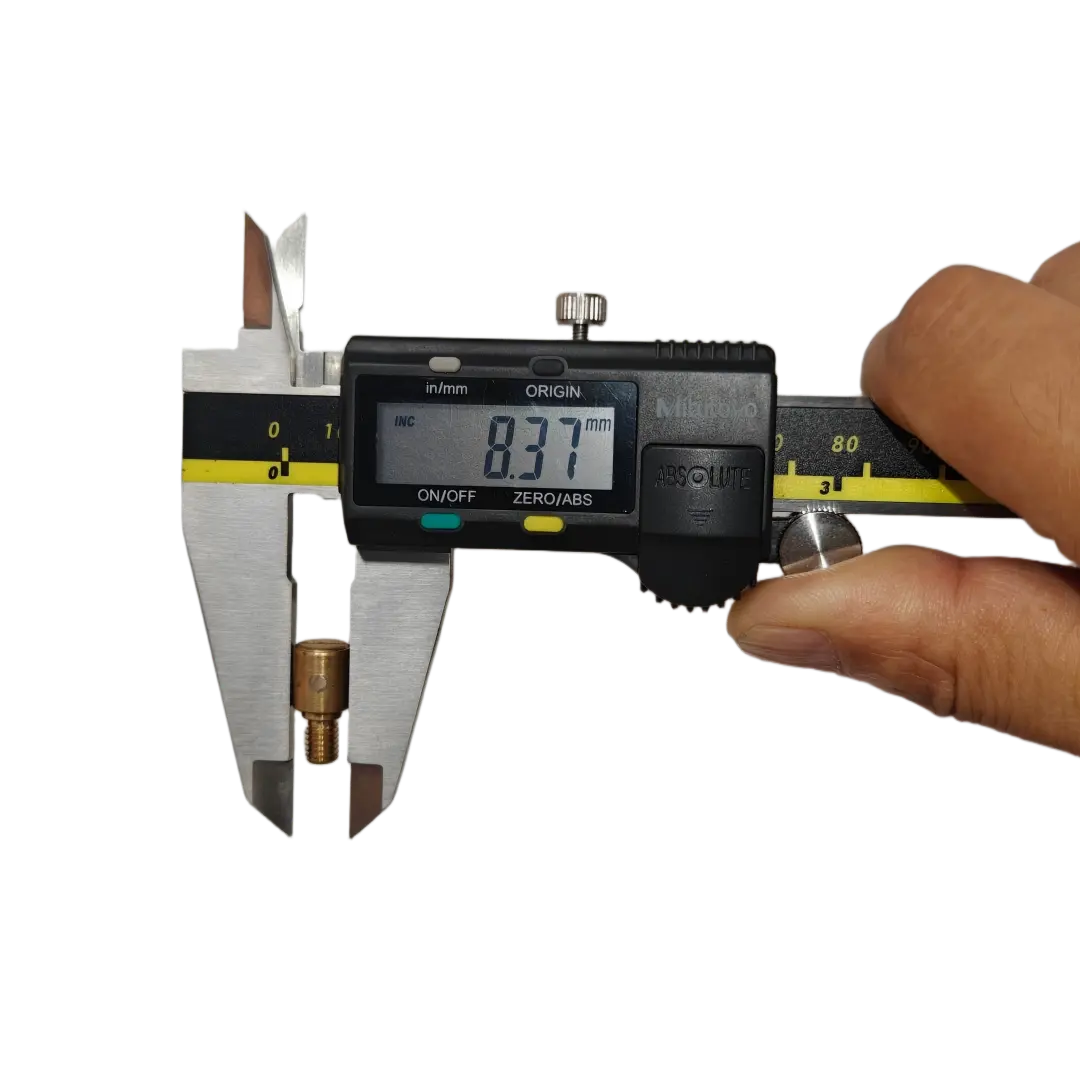
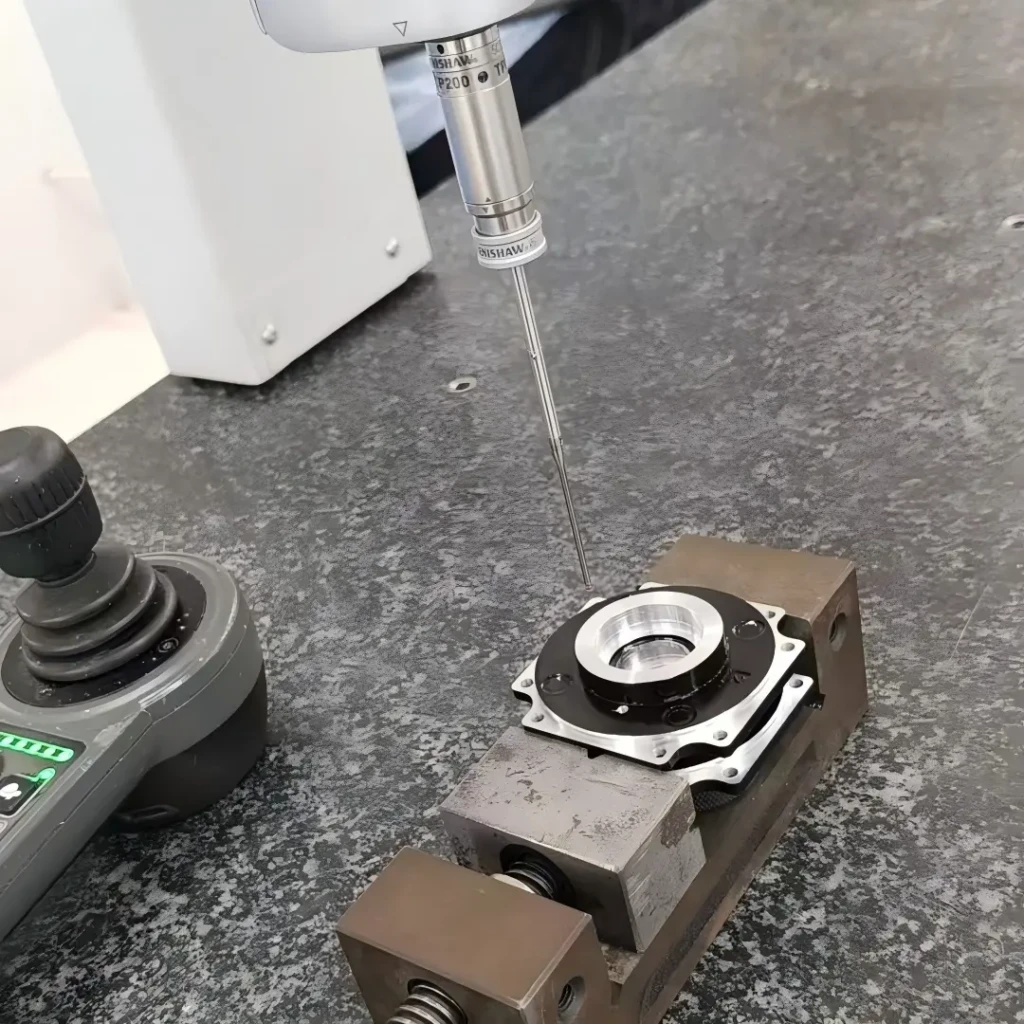
As an ISO 9001:2015 certified manufacturer, 6CProto embeds quality control into every stage of production. The facility uses professional inspection equipment such as spectrometers, 2.5D measuring instruments, coordinate measuring machines, and digital height gauges to verify dimensions and material properties. Final Quality Control, Outgoing Quality Control, and Dimensional Inspection Reports confirm that tolerance requirements are met before parts are shipped, providing a structured approach for buyers who need reliable, repeatable results across production batches.
Integrated Multi-Process Production Ecosystem
Offering rapid prototyping through CNC machining, 3D printing, injection molding, sheet metal fabrication, and vacuum casting under one roof allows buyers to select the most appropriate method for their specific tolerance and functional requirements. For example, a part can be 3D printed for early concept validation, transitioned to CNC machining for functional testing with final production-grade materials, and scaled via injection molding. Each stage maintains consistent tolerance control under a single quality system, eliminating performance drift.
Design for Manufacturability and Rapid Quoting
Upon receiving engineering drawings, 6CProto’s engineering team provides detailed DFM feedback and comprehensive quotations within 24 hours. This includes explicit recommendations on how to adjust designs to meet tolerance requirements more efficiently, such as relaxing non-critical dimensions, optimizing wall thickness, or selecting more suitable processes. Fast, actionable DFM support helps buyers avoid over-tolerancing, reduce production costs, and improve manufacturability without sacrificing field performance.
Practical Sourcing Scenarios and Case Studies
Hardware Startup Developing a Precision Mechanical Component
Traditional sourcing routes often involve using a low-cost local machine shop with limited multi-axis capability. This results in tolerances that vary widely between batches, causing severe assembly line delays. By partnering with 6CProto, startups leverage CNC machining with plus or minus 0.01 mm capability, ISO-based quality control, and upfront DFM feedback to optimize the design for both tolerance and cost. This ensures reliable functional prototypes and production parts that fit consistently, reducing rework and product launch delays.
Distributor Scaling a Consumer Electronics Product
When scaling a product using multiple unverified suppliers, companies face inconsistent tolerance control where some batches fail functional testing, leading to supply chain blockages. Transitioning to a single manufacturing partner with multi-process capability allows a smooth evolution from rapid CNC prototypes to higher-volume production. Standardized quality control ensures consistent tolerance performance across all production lots, smoother scale-up, and improved product reliability in the retail market.
Sourcing Manager for Industrial Equipment Procurement
Trading companies often relay complex engineering drawings to different factories, leading to unclear tolerance specifications, high scrap rates, and post-delivery warranty claims. Engaging directly with an engineering-led manufacturer ensures clear tolerance specification alignment and official documentation through inspection reports. This direct relationship reduces component defect rates, establishes predictable lead times, and strengthens confidence in long-term supplier performance.
Smart Home Brand Iterating Custom Enclosure Designs
Using generic 3D printing for early iterations and then switching to a completely different factory for injection molding often causes tolerances and component fit to change significantly. An integrated prototyping and injection molding strategy under a single quality system keeps tolerance control stable from the first prototype to final assembly. The result is faster iteration cycles, superior aesthetic fit, and a smooth transition into mass production.
Operational Workflow for Precision Manufacturing
Upload CAD Files
Submit 2D drawings with clear tolerance annotations or 3D CAD models in standard formats including STEP, STP, SLDPRT, IPT, PRT, SAT, IGES, IGS, CATPART, X_T, OBJ, or STL through the 6CProto secure online interface.
DFM Review and Quotation
Within 24 hours, the engineering team reviews the geometry for manufacturability, provides detailed DFM feedback, and issues a formal quotation complete with estimated lead times.
Confirm Tolerance and Process
Align on critical dimensions, select the most suitable manufacturing process, and confirm surface finish requirements alongside specific inspection criteria.
Production and Quality Control
Parts are manufactured according to strict ISO 9001:2015 standards, utilizing in-process and final inspections. Detailed inspection reports such as DIR, FQC, and OQC are generated and provided on request.
Global Delivery
Once quality is verified, parts are packaged securely and shipped worldwide via an established global logistics network.
Scale to mass production
For projects transitioning from prototype to mass production, the manufacturing network and standardized processes help maintain consistent tolerance control as production volume scales.
Frequently Asked Questions
What is the typical engineering tolerance range for CNC machining?
Standard CNC machining services typically achieve a tolerance of plus or minus 0.02 mm. For precision features on well-designed parts, tolerances of plus or minus 0.01 mm can be reached depending on the specific geometry, material selection, and machine setup. Tighter tolerances generally require specialized tooling, slower feed rates, and increased inspection frequency.
How can engineers ensure tolerance consistency across multiple production batches?
Batch-to-batch consistency is achieved by utilizing ISO 9001:2015 certified production processes, implementing standardized inspection methods, and deploying experienced process engineers who actively monitor machine calibration, tool wear, and raw material variability.
Can injection molding meet the exact same tolerance limits as CNC machining?
Generally, no. Injection molding tolerances are inherently looser, typically ranging from plus or minus 0.05 mm to plus or minus 0.2 mm, due to material shrinkage and thermal cooling variations. For parts requiring molding efficiency alongside machining-level precision, critical features can undergo post-mold CNC machining operations.
What specific information is required to receive an accurate tolerance-based quote?
Buyers should provide fully annotated 2D drawings detailing critical tolerances alongside their 3D CAD models. The documentation should also explicitly state material grades, surface finish requirements, quantity data, and any specific inspection or testing certifications required.
How do tight tolerance choices directly impact project lead times?
Tighter tolerances expand project lead times because they require highly precise machine setups, slower machining speeds to avoid thermal expansion, specialized metrology equipment, and more frequent inspection intervals. Over 90 percent of standard CNC machining orders are completed within 7 days, but over-tolerancing can extend this timeline.
How does a Design for Manufacturability review optimize tolerance selection?
A DFM review analyzes component geometry to identify features that are difficult to tolerance reliably, such as deep pockets, thin walls, or sharp internal corners. Engineers then suggest specific adjustments to relax non-critical dimensions or modify geometry, balancing manufacturing feasibility with part performance.