

Over the past several years, aluminum has remained the dominant non-ferrous metal for CNC machining — thanks to its strength-to-weight ratio, corrosion resistance, and machinability across automotive, aerospace, robotics, and electronics. Within that demand, 6061‑T6 and 7075‑T6 are the two most widely specified alloys, with 7075‑T6 offering nearly double the yield strength of 6061‑T6 but at a noticeable cost and process penalty. As more companies outsource complex CNC parts to specialized partners, the choice between these two grades has become a key lever for balancing performance, aesthetics, lead time, and total part cost.
Where a Manufacturing Partner Fits In
6CProto is a precision manufacturing provider focused on rapid prototyping and custom parts, combining CNC machining, 3D printing, injection molding, and sheet metal fabrication under one roof. With ISO 9001:2015 certification and a distributed network of manufacturing centers, it supports both prototypes and low-volume production of aluminum parts, including 6061‑T6 and 7075‑T6. For customers deciding between these alloys, engineering support and a fast quote process translate design requirements into the right material-and-process combination from the start.
What These Alloys Are
aluminum CNC machining is the process of using computer-controlled cutting tools to remove material from aluminum stock — 6061‑T6 or 7075‑T6 — to create finished parts with tight tolerances, defined surface finishes, and repeatable geometry. The grade determines how the part behaves in terms of strength, weight, machinability, corrosion resistance, weldability, and anodizing quality.
The Common Pain Points
Over-specification is common. A large share of CNC parts would function perfectly in 6061‑T6, yet 7075‑T6 is still specified “just in case,” which can raise material cost by roughly 40–50% and add machining complexity. That inflates budgets across brackets, housings, and fixtures that never operate near 6061‑T6’s strength limits.
Under-specification carries its own risks. In highly stressed structures — aerospace components, high-performance driveline parts, or weight-critical robotic arms — 6061‑T6 may run out of strength margin, driving premature failure or forcing thick cross-sections that erode aluminum’s weight advantage. Not stepping up to 7075‑T6 can compromise safety and performance over the product’s life.
Hidden process trade-offs are often overlooked. Both alloys are machinable, but 6061‑T6 is “gummier” and can complicate chip evacuation, while 7075‑T6’s higher hardness breaks chips cleanly but increases tool wear and demands more rigid setups. Differences in weldability, fatigue performance, and anodizing quality affect downstream steps but are rarely discussed early enough in design reviews.
Communication can be fragmented. Without a partner who can advise on alloy selection and process parameters, teams run repeated trial-and-error prototyping cycles, adding weeks to development schedules. An integrated prototyping and manufacturing provider closes the loop between design intent and real-world machining behavior.
Key Technical Differences That Matter
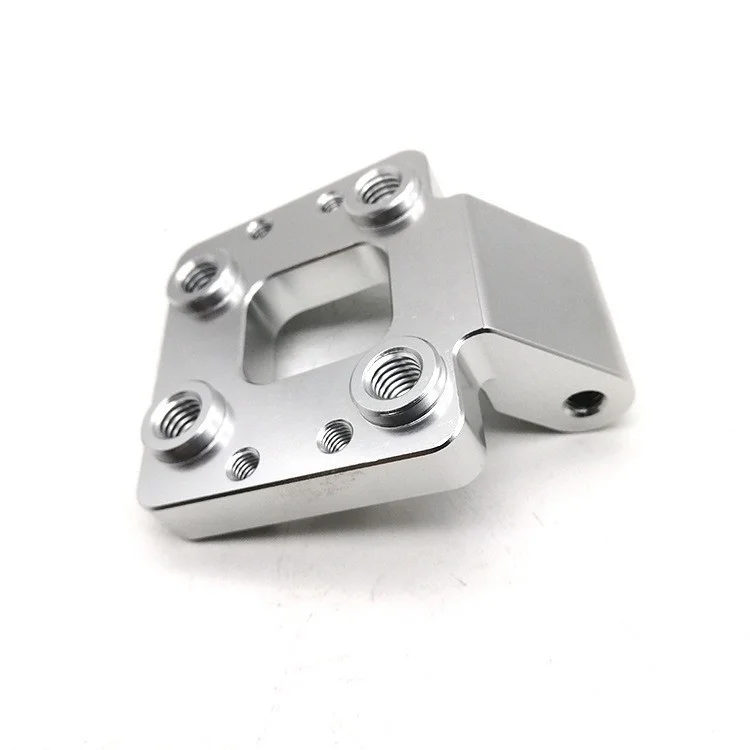
Mechanical strength and stiffness. 7075‑T6 delivers significantly higher tensile and yield strength than 6061‑T6 — typically around 500–560 MPa tensile for 7075‑T6 versus roughly 290–310 MPa for 6061‑T6, with yield strength near 500 MPa versus 240–276 MPa. That makes 7075‑T6 the go-to alloy when designers are weight-constrained yet need near-steel strength.
Machinability, tool wear, and chip behavior. 6061‑T6 cuts with lower forces and less tool wear, making it cost-effective for high-speed, high-volume runs. 7075‑T6’s higher hardness improves chip break and stability but demands rigid machines, robust workholding, and wear-resistant tooling to avoid cost creep.
Weldability, anodizing, and corrosion. 6061‑T6 welds well and produces a clean, uniform anodized finish, which is why it dominates in frames, enclosures, and visible consumer products. 7075‑T6 welds poorly and tends toward duller anodized finishes due to its chemistry, though hard anodizing improves its wear and corrosion resistance.
Real-World Usage Examples
A robotics OEM chooses 6061‑T6 for motor mounts and sensor brackets, balancing strength, clean anodizing, and lower cost for large batches. An aerospace supplier specifies 7075‑T6 for a critical hinge and wing-mounted bracket where steel-like strength and minimal weight are essential and welding is not required. A performance cycling brand uses 6061‑T6 for handlebar clamps and 7075‑T6 for high-stress axle components, aligning each alloy with its mechanical and fatigue demands.
How to Choose Between 6061‑T6 and 7075‑T6
- Define the part’s primary constraint. Decide whether the limiting factor is cost, weight, stiffness, strength, aesthetics, or downstream processes like welding and anodizing. For many general-purpose components, cost and finish are decisive, favoring 6061‑T6.
- Quantify loads and safety factors. Use realistic load cases and safety factors to see whether 6061‑T6 already meets requirements; if it does, the extra strength of 7075‑T6 may not yield real-world benefit.
- Assess the role of weight. In weight-sensitive systems — aerospace, UAVs, racing — check whether 7075‑T6 allows thinner sections or less mass while keeping a safe margin; if not, 6061‑T6 likely remains the better choice.
- Evaluate manufacturing processes. If the design requires welding or forming, 6061‑T6’s weldability and formability are strong arguments in its favor. If the part is machined from bar, 7075‑T6’s cost penalty should be weighed against its strength gain.
- Compare anodizing and finishing needs. Visible consumer parts usually favor 6061‑T6 for a clean finish; hard-anodized 7075‑T6 may serve wear or corrosion requirements where appearance is secondary.
- Quote both routes at the real quantity. Material cost, machining time, tooling, finish, and inspection differ between grades; the comparison at your actual volume decides.
Usage Scenarios in Practice
Scenario 1 — an enclosure project. A team mistakenly standardized everything on 7075‑T6. Moving covers, brackets, and non-critical plates to 6061‑T6 cut material spend and machining complexity while keeping structural links in 7075‑T6, balancing performance and cost across the BOM.
Scenario 2 — an aerospace-style bracket. A highly loaded structural bracket benefited from 7075‑T6 because a thinner section met the load requirement with less mass; 6061‑T6 would have required a heavier cross-section.
Scenario 3 — a visible consumer product. A product with a decorative anodized finish used 6061‑T6 for appearance-critical parts and reserved 7075‑T6 only for a loaded hinge component hidden from view.
Beyond Aluminum: Complementary Processes
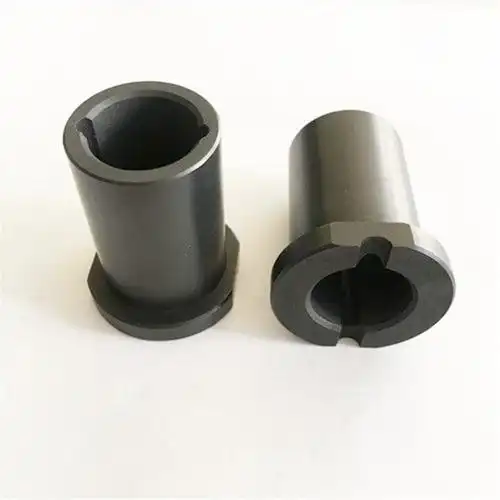
aluminum CNC machining is rarely the whole story. 3D-printed prototypes can validate ergonomics and internal packaging before finalizing machined 6061‑T6 housings, reducing machining iterations and scrap. Injection-molded parts can replace machined aluminum in non-structural housings once designs stabilize, lowering unit cost at higher volumes while retaining machined aluminum for heat-loaded or structural components.
FAQs
How do I decide between 6061‑T6 and 7075‑T6? Check whether 6061‑T6 meets strength and stiffness needs under realistic loads — it is usually cheaper, easier to machine, and better to weld and anodize. Reserve 7075‑T6 for weight-critical, high-stress parts where the extra strength directly translates into performance or safety.
Is 7075‑T6 always “better”? No. It is stronger, but more expensive, harder to weld, and often less attractive after anodizing, and it demands more from tools and setups. For most brackets, enclosures, fixtures, and moderate-load parts, 6061‑T6 is the better balance.
What are the main machining differences? 6061‑T6 machines smoothly with lower cutting forces and less tool wear, ideal for high-speed, high-volume work. 7075‑T6 breaks chips more cleanly and offers high stability but requires rigid machines, optimized parameters, and more frequent tool replacement.
How do anodizing and finish compare? 6061‑T6 is the better choice for decorative anodizing, producing a clean, uniform silver-grey finish. 7075‑T6, with its higher copper and zinc content, may show duller or slightly discolored anodized surfaces, although hard anodizing improves wear and corrosion resistance.
Can I weld 7075‑T6? In general, 7075‑T6 is not recommended for welded structures — the T6 temper is destroyed in the heat-affected zone and restoring properties via re-heat-treatment is rarely practical. If the design requires welding, 6061‑T6 is the more suitable choice.
How can a partner help optimize the project? A manufacturer with strong engineering support can review your CAD, load cases, and volumes to recommend where 6061‑T6 is sufficient and where 7075‑T6 is justified, then validate performance, finish, and dimensional stability before locking in material decisions for larger runs.
Conclusion
Choosing between 6061‑T6 and 7075‑T6 is less about picking a “better” alloy and more about aligning properties, manufacturability, and cost with the actual job each part does. For most machined components, 6061‑T6 delivers an effective balance of mechanical performance, weldability, anodizing quality, and cost, while 7075‑T6 excels in specific high-stress, weight-critical roles. Bringing a manufacturing partner into the conversation early avoids both over- and under-specification, shortens prototyping cycles, and controls lifecycle cost.