
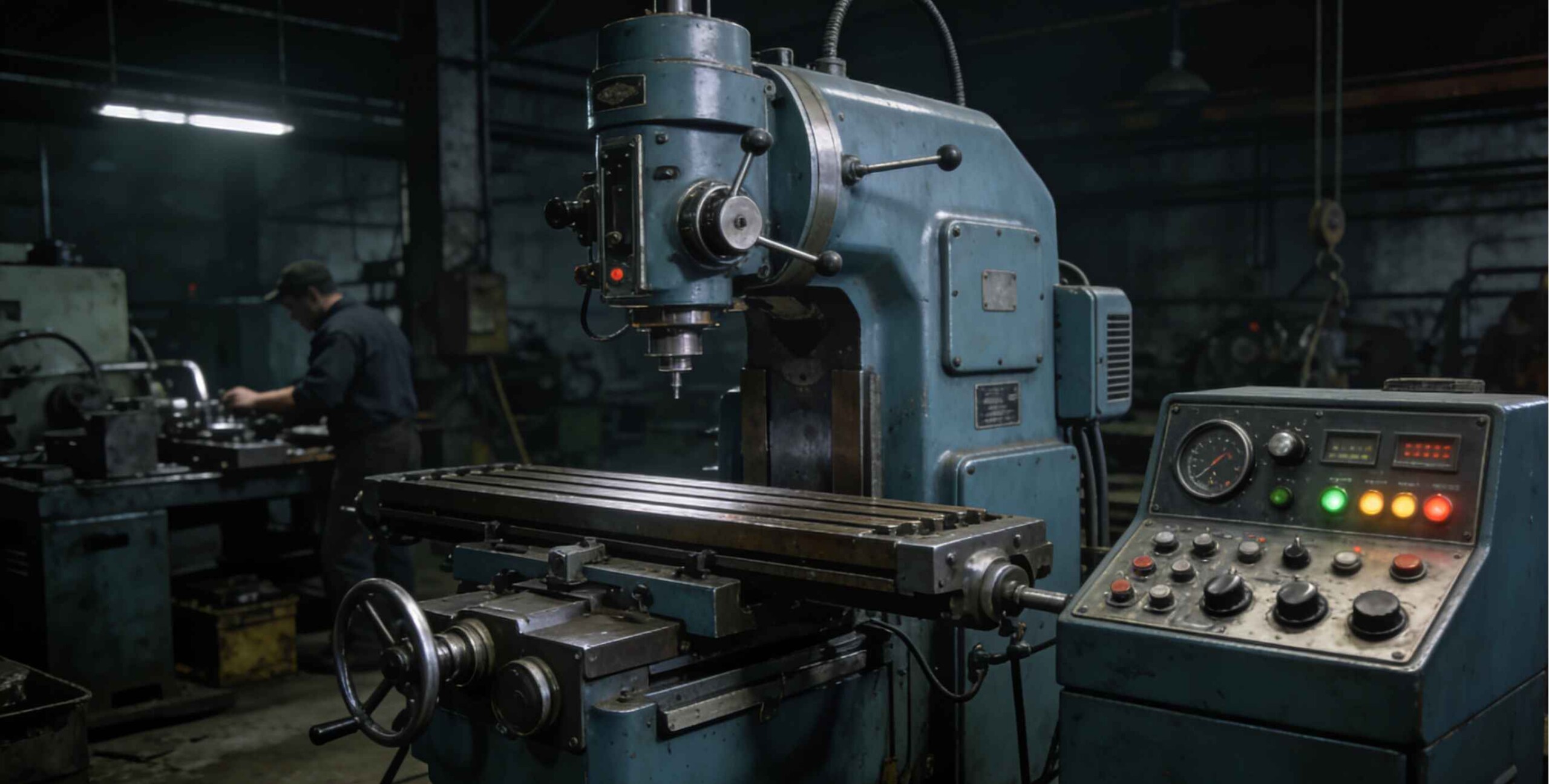
Today, CNC machining is naturally associated with high precision and automated manufacturing. But if we turn back the clock to the era when machining was dominated by manual operations, the existence of modern CNC machines would be almost unimaginable: a workpiece clamped onto the table, a program initiated, and the tool following a preset path to produce a finished part that requires little to no hand finishing.
This manufacturing method did not emerge fully formed. Instead, it has gone through more than half a century of technological accumulation and conceptual breakthroughs. To understand how CNC machining became the standard of modern manufacturing, we can examine its evolution from three perspectives:
- the emergence of early automatic control concepts
- the introduction of computer technology into machining
- the software- and data-driven architecture of modern CNC systems

The Emergence of Automatic Control Concepts
Before CNC machines existed, industry already had the idea of “controlling mechanical motion through data.” Early textile machines, punched-card control devices, and servo mechanisms all served as inspirations for later numerical control systems.
It was the demanding requirements of aerospace manufacturing in the mid-20th century that truly introduced “digital control” into metalworking. To produce complex aerodynamic surfaces and thin-walled structures, traditional machines could no longer meet accuracy and repeatability requirements. This gap created the need for a more advanced automated machining solution.
From Numerical Control to Computer Control: The Birth of CNC
The first attempt to use “digital data” to control machine motion came when aerospace engineers calculated wing-profile coordinates and fed them into a machining device to guide tool movement. This idea led to the first generation of NC (Numerical Control) machines.
Although NC systems still relied heavily on punched tape, analog circuits, and mechanical logic, they enabled the machining of curves that were impossible to achieve manually—proving the feasibility of digitally controlled toolpaths.
With the rapid advancement of electronic computing, machines began to feature:
- Editable programs
- Stored machining paths
- Input/output capabilities
This marked the transition from NC to CNC (Computer Numerical Control).

The Advancement of CNC: From 2D Machining to Complex Spatial Geometry
Early automation was limited to single planes or simple contours. As computational power improved, machine design evolved dramatically:
1. Introduction of Multi-Axis Linkage
Software increasingly enabled coordinated motion across the X/Y/Z axes, allowing the machining of complex shapes such as curved surfaces, helical channels, and turbine blades.
2. Convergence of Design and Manufacturing
By the late 20th century, CAD was used to model parts in 3D, while CAM converted those models into toolpaths. This integration allowed CNC machines to execute machining directly from digital models, significantly reducing manual conversion errors.
3. Standardization of Control Systems
G-code emerged as an industry-wide programming standard, making processes more consistent across different machines and manufacturers.
These breakthroughs gradually established CNC as the foundation of precision manufacturing.
Modern CNC Machining: A Software-Driven Manufacturing System
Today, CNC machining is no longer just a machine—it is a complete digital manufacturing ecosystem including:
- Parametric design
- Automated toolpath generation
- Intelligent monitoring and compensation
- Multi-axis simultaneous machining
- High-speed servo control
Compared with decades ago, the core of CNC is no longer the mechanical hardware alone, but the software, algorithms, and control systems behind it.
At HorizonRP, technologies such as automatic tool length compensation, real-time error correction, and machining simulation have significantly improved speed, stability, and the manufacturability of complex geometries.
Advantages of CNC Machining
Modern manufacturing relies on CNC for several key reasons:
1. Superior Precision Control
Advanced servo systems achieve micron-level motion accuracy, ensuring exceptional consistency across parts.
2. Ideal for Repetitive Manufacturing and Scaling
Once programmed, CNC machines can produce identical parts across prototypes, small batches, and large-scale production.
3. Broad Material Compatibility
Metals, engineering plastics, and many hard materials can all be machined as long as they meet cutting requirements.

4. No Complex Tooling Required
Compared with casting or injection molding, CNC is highly flexible for custom parts—and design changes do not require new molds.
Common Applications of CNC Machining
CNC machining is now pervasive across industries requiring high precision or complex geometries:
Aerospace
Turbine blades, structural components, and reinforcement parts rely heavily on high-consistency machining.
Automotive Engineering
From engine brackets to fixtures and internal mechanisms, CNC enables rapid, reliable production.
Medical Devices
Surgical instruments and implants demand tight tolerances and high-quality surface finishes.
Consumer Electronics
Metal housings and precision interlocking structures are typically CNC-machined.
Prototype Development
Design teams use CNC to quickly produce physical samples directly from 3D models, accelerating product development cycles.
Conclusion: From Laboratory Technology to the Cornerstone of Modern Manufacturing
The evolution of CNC machining reflects continuous integration across automation, materials science, computer technology, and manufacturing philosophy. From early point-to-point control to today’s intelligent, software-driven systems, CNC has evolved from a niche tool into a core industrial capability.
With the rise of AI, automated programming, and lights-out factories, the future of CNC machining will resemble an autonomous decision-making system rather than a mere command-execution device.
Latest Post

Liquid Silicone Rubber Molding: Process, Benefits, Applications, and Design Considerations
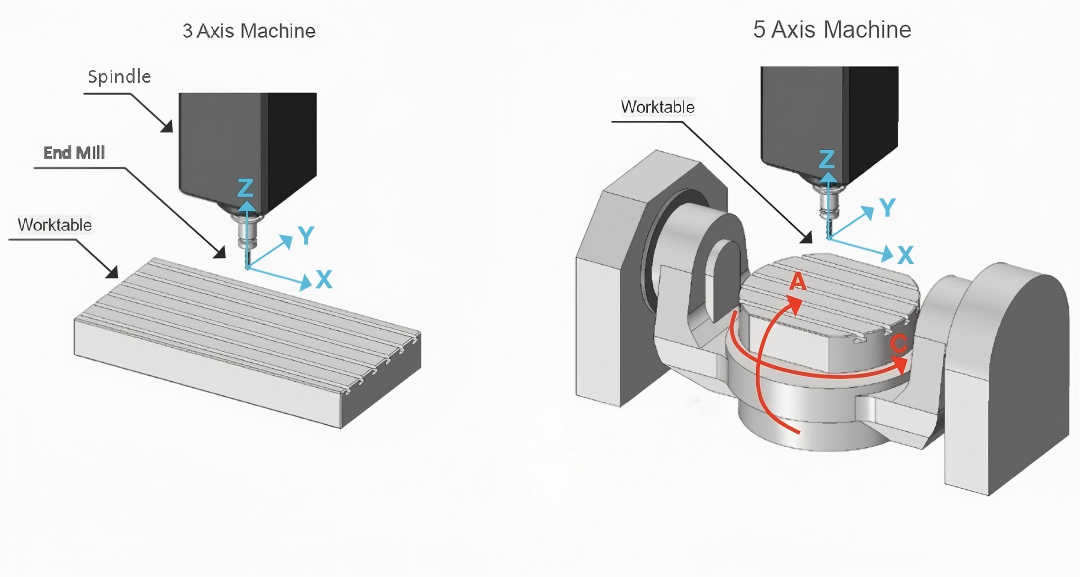
What is a 5-axis machine? The differences from 3-axis machines and their applications.
What Is a Tack Weld? Definition, Purpose, and Applications
How to Remove Burrs from CNC Machined Parts: Common Deburring Methods Explained