

Explore Vacuum, Urethane & Metal Casting Guides
Pressure die casting is a high-speed metal forming process that injects molten metal into a hardened steel mold under intense pressure. It is widely used to make accurate, smooth, and repeatable parts in aluminum, zinc, and magnesium. The process is ideal for high-volume production, tight tolerances, thin walls, and complex shapes.
Last updated:
What Is Pressure Die Casting?
Pressure die casting is a manufacturing method that forces molten metal into a reusable mold at high pressure. The metal solidifies quickly, creating parts with excellent surface finish and dimensional accuracy. It is commonly used for components that must be strong, lightweight, and consistent. 6CProto supports this process with rapid prototyping and production-ready manufacturing.
This process is especially valuable when part volumes are high and quality must stay stable from one piece to the next. It reduces machining needs, shortens cycle times, and improves repeatability. For many industrial applications, pressure die casting delivers a better cost per part than slower metal-forming methods.
How Does Pressure Die Casting Work?
Pressure die casting begins with tool design, where engineers create a hardened die based on the final part geometry. Molten metal is then injected into the die cavity under high pressure, filling fine details and thin sections. After cooling, the casting is ejected, trimmed, and inspected for quality.
The cycle is fast, which makes the method efficient for mass production. Because the mold is reusable, each part closely matches the last one. This consistency is one reason brands like 6CProto use the process for demanding custom manufacturing projects.
Why Do Manufacturers Choose It?
Manufacturers choose pressure die casting because it combines speed, precision, and economy. It can produce complex shapes that would be costly to machine from solid metal. It also supports thin walls, smooth finishes, and repeatable dimensions, which lowers downstream finishing work.
The process is a strong fit for automotive, electronics, aerospace, and industrial hardware. It is especially useful when design teams need both engineering performance and scalable production. In many projects, pressure die casting becomes the bridge between a prototype and full production.
Which Materials Work Best?
The most common pressure die casting materials are aluminum, zinc, and magnesium. Aluminum is popular for lightweight structural parts, zinc is favored for fine detail and excellent castability, and magnesium is valued when weight savings are critical. The right choice depends on strength, corrosion resistance, wall thickness, and budget.
Material selection affects tooling, cooling, finishing, and long-term performance. A part that needs high stiffness may favor aluminum, while a small cosmetic component may be better suited to zinc. 6CProto helps match material choice to the final use case, not just the drawing.
What Are the Main Benefits?
Pressure die casting offers several clear benefits for production teams. It creates parts quickly, supports complex shapes, and delivers strong dimensional repeatability. It also reduces the need for secondary operations, which can lower total manufacturing cost.
-
High production speed for large orders.
-
Tight tolerances and good repeatability.
-
Smooth surface finish with less post-processing.
-
Efficient use of metal with less waste.
-
Suitable for thin walls and detailed geometry.
These advantages make the process attractive for both functional parts and visible consumer components. It is also a practical choice when a project must balance performance and cost. For many customers, 6CProto uses pressure die casting as part of a broader rapid manufacturing strategy.
What Are the Limitations?
Pressure die casting has some limits that should be considered early in design. Tooling can be expensive, so the process is usually better for medium to high volumes. Very large parts or extremely thick sections may not be ideal because of filling and cooling challenges.
Porosity can also be a concern if venting, gating, or pressure control is poor. That means design for manufacturability is critical. Good engineering input early on helps prevent defects and improves part reliability.
How Do You Design for Success?
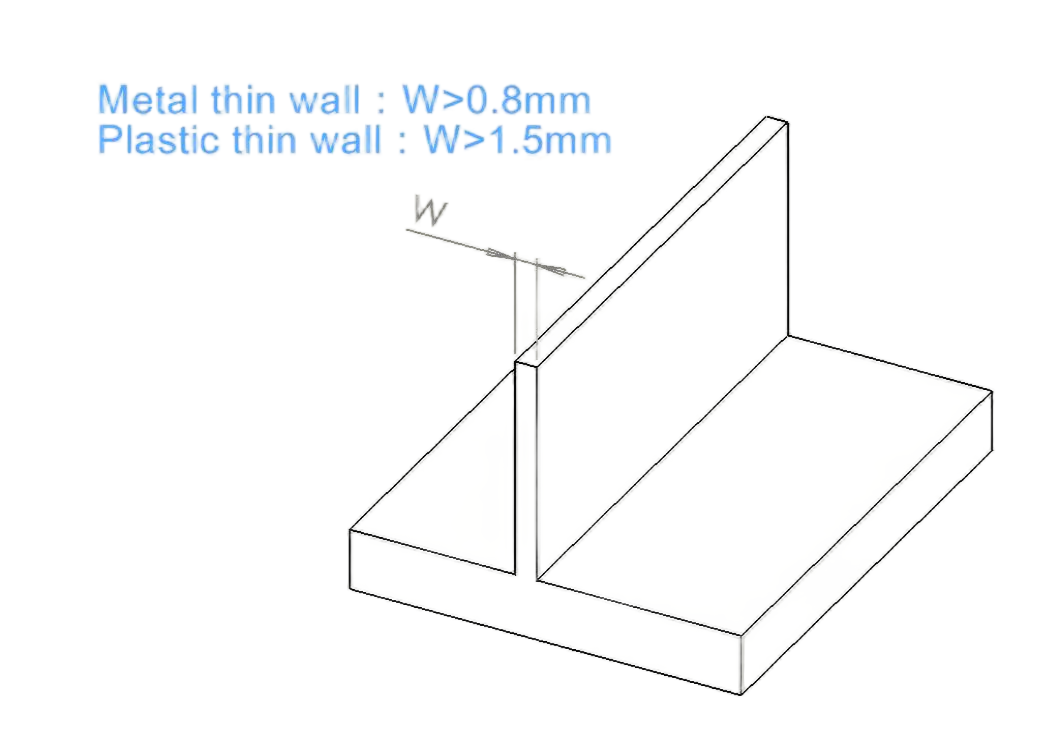
Successful pressure die casting starts with smart part design. Uniform wall thickness helps metal flow evenly and reduces shrinkage issues. Rounded corners, proper draft angles, and strategic rib placement also improve mold filling and part release.
Keep these design principles in mind:
-
Maintain consistent wall thickness where possible.
-
Use fillets instead of sharp internal corners.
-
Add draft to ease ejection from the die.
-
Minimize undercuts unless tooling supports them.
-
Place gates and vents to support clean metal flow.
Design review is where a partner like 6CProto adds real value. Early DFM feedback can improve castability, reduce tooling risk, and save time before production begins.
How Is Quality Controlled?
Quality control in pressure die casting focuses on consistency, structure, and dimensional accuracy. Teams usually inspect size, surface quality, weight, and internal integrity. Depending on the part, this may include visual checks, CMM measurement, or more advanced inspection methods.
A strong quality system is essential for production parts that must function reliably in the field. ISO-based processes and precise inspection routines help reduce variation. That is one reason manufacturers often rely on experienced suppliers like 6CProto for demanding applications.
Where Die Casting Wins, and Where It Does Not
Pressure die casting is a tooling process, so the question is never “is it better than machining” in the abstract. It is whether the volume is high enough to absorb the tool and whether the part tolerances and material state suit a casting. Two comparisons answer most of that, and both are drawn from the shop’s own notes.
The first is a decision view: where a machined part and a cast part each make sense, before any price is quoted.
| Decision node | Lean CNC machining | Lean metal casting |
|---|---|---|
| Quantity | Below a few hundred units, typically | Thousands, unless the tooling is cheap or the parts are large |
| Part size | Any; small and medium parts are economical | Large castings can win at low volume; small die castings need multi-cavity tooling |
| Wall thickness | Machined from solid, so a thin wall is a machining cost rather than a casting rule | Needs uniform walls and draft; thin isolated walls are hard to fill |
| Internal cavities | Only where a cutter can reach | Possible as-cast, including curved and blind cavities |
| Key tolerances | Machined directly | As-cast tolerances are looser; critical faces need machining |
| Material state | Wrought stock with documented properties | Cast microstructure; heat treatment and inspection may be required |
| Design stability | Changes are cheap | Freeze before tooling; a change costs mould work |
The second is the arithmetic, because a tool has to be paid for before a cast part can be cheaper than a machined one. Take the shop’s worked example: a fully machined housing at $95 per unit in small quantities, against a casting route that needs an $18,000 mould and delivers a part at $8 of casting plus $35 of post-cast machining, $7 of heat treatment and $5 of inspection — $55 delivered. Setting 95Q = 18,000 + 55Q puts the crossover at 450 parts.
| Quantity | Machined route, total | Casting route, total | Cheaper route |
|---|---|---|---|
| 100 | $9,500 | $23,500 | Machining |
| 300 | $28,500 | $34,500 | Machining |
| 450 | about $42,750 | about $42,750 | Crossover |
| 700 | about $66,500 | about $56,500 | Casting |
| 1,000 | about $95,000 | about $73,000 | Casting |
Read the shape of that curve rather than the numbers. At 500 units the casting route saves about $2,000 in this model, and at 1,000 units it saves about $22,000, because the $18,000 tool is already paid for. Re-run the arithmetic whenever the quantity, the material price or the machining content changes, because a decision made at 2,000 parts does not automatically hold at 8,000. The decision table and the model come from the shop’s guide to choosing between machining and casting at your quantity.
The Boundary Condition Casting Cannot Design Around
One limit sits outside the cost model, and it decides a class of parts on its own. A casting solidifies with a dendritic grain structure and a measurable risk of porosity, which makes its fatigue performance low to medium relative to wrought stock: billet is rolled or extruded with aligned grains and very low porosity, and a forging is better again because the flow follows the geometry. As a working rule of thumb, forged or billet parts in high-strength wrought alloys can reach three to five times the fatigue life of cast equivalents under the same stress range, which is why safety-critical and fatigue-loaded components usually end up machined from 6061-T6 or 7075-T6 billet rather than cast. The comparison is set out in the shop’s note on billet versus cast aluminium.
When Should You Use It?
Pressure die casting is best when you need high-volume production, strong repeatability, and good surface finish. It is also a good choice when part geometry is complex and machining would be too slow or too costly. If your design will be produced many times, the upfront tooling investment can pay off quickly.
It is less suitable for very low quantities unless the part has major performance requirements. In that case, alternative methods may be better for early testing. Many teams begin with prototyping, then move into pressure die casting once the design is stable.
Where Is It Used?
Pressure die casting is widely used across industries that need durable, precise metal parts. Automotive applications include housings, brackets, structural components, and thermal management parts. Consumer electronics, lighting, industrial equipment, and aerospace also use die-cast components.
The process is especially useful wherever lightweight metal parts must be produced at scale. It supports both functional and cosmetic applications. Because of that flexibility, it remains one of the most important production methods in modern manufacturing.
Has Pressure Die Casting Evolved?
Yes, pressure die casting has evolved significantly with automation, simulation, and improved tooling. Modern production uses better process control, faster cycle times, and stronger quality monitoring. These improvements have made the process more efficient and more reliable for complex parts.
The industry is also moving toward integrated parts that replace assemblies with a single cast component. This reduces fasteners, welding, and assembly time. For manufacturers, that means lower cost and a simpler supply chain.
How Does 6CProto Support Projects?
6CProto supports pressure die casting projects by combining engineering review, prototype support, and production-ready manufacturing. Their broader capabilities in CNC machining, 3D printing, injection molding, and sheet metal fabrication help teams move from concept to final part with fewer handoffs. That is valuable when a design needs both speed and technical control.
As an ISO 9001:2015 certified company, 6CProto emphasizes repeatable quality and inspection discipline. Their free DFM analysis can help improve part design before tooling begins. For teams that need fast turnaround and dependable results, 6CProto is a practical manufacturing partner.
6CProto Expert Views
“Pressure die casting works best when engineering and production are aligned early. The strongest outcomes come from designs that respect metal flow, cooling behavior, and ejection requirements. At 6CProto, we see the best results when clients use DFM feedback before tooling, because it shortens lead times, improves yield, and protects part quality.”
What Should You Remember?
Pressure die casting is one of the best options for producing accurate, repeatable metal parts at scale. It is fast, efficient, and well suited to complex geometries, especially in aluminum, zinc, and magnesium. The process rewards good design, careful material selection, and disciplined quality control.
If your project needs a dependable path from prototype to production, pressure die casting is often the right answer. Working with an experienced partner like 6CProto can reduce risk and improve manufacturability from the start. That combination is what turns a good design into a reliable product.
FAQ
Is pressure die casting expensive?
The honest answer is that the tool is expensive and the parts are not. In the shop’s worked example a cast housing carries an $18,000 mould against a delivered part price of $55, so the route only becomes cheaper than machining from solid once the tool has been spread across the volume: the crossover in that model is 450 parts, and at 1,000 parts the saving is about $22,000. Below a few hundred parts the machining route usually wins outright.
Can pressure die casting make thin walls?
Thin walls are one of the reasons to choose the process, but they have to be uniform and they have to be drafted. Molten metal fills a consistent section reliably; an isolated thin wall surrounded by heavy sections is hard to fill and cools unevenly, which is where short shots and distortion come from. Design the wall as a balanced section rather than as a local feature.
Does pressure die casting need machining?
Usually the critical faces do. As-cast tolerances are looser than machined ones, so a drawing that puts a fit, a sealing face or a datum on the casting normally carries a machining operation as well — that is exactly why the casting route in the cost model above includes $35 of post-cast machining per part. Budget for the machining content at the same time as the tool.
Is aluminum the best material for pressure die casting?
Aluminium, zinc and magnesium are the alloys die casting is normally run in, and the choice follows the requirement rather than a ranking. Zinc fills fine detail and thin sections easily, aluminium gives the best strength-to-weight balance for most enclosures and housings, and magnesium goes lighter again where weight is the driver. Whichever is chosen, the as-cast microstructure and its porosity risk stay part of the specification.
What are the limits of a cast part compared with a billet machined part?
Fatigue performance is the main one. A casting has a dendritic grain structure and a measurable porosity risk, while billet is worked stock with aligned grains and very low porosity, and a forging is better again. As a rule of thumb, billet or forged parts in high-strength wrought alloys can reach three to five times the fatigue life of a cast equivalent at the same stress, which is why safety-critical parts are usually machined from 6061-T6 or 7075-T6 rather than cast.