

Explore Quality, DFM & Procurement Guides
A zero-defect quality policy prevents errors by embedding quality into every stage of design and production. It reduces scrap, avoids assembly failures, and ensures consistent compliance with specifications. By combining process control, inspection, and continuous improvement, manufacturers achieve faster delivery, lower costs, and reliable performance, especially in custom manufacturing and rapid prototyping environments.
Last updated:
(Edited on June 16, 2026)
What Is Zero-Defect Quality Policy?
Zero-defect quality policy is a manufacturing approach focused on preventing defects rather than detecting them after production. It emphasizes process control, root-cause elimination, and standardized operations to ensure every part meets requirements.
This approach is especially valuable in custom manufacturing, where complex geometries and tight tolerances increase risk. Companies like 6CProto apply this philosophy across CNC machining, injection molding, and other processes to ensure consistent results from prototype to production.
Why Does It Reduce Scrap?
It reduces scrap by identifying and controlling sources of variation before defects occur. These sources include design flaws, unstable machining parameters, improper tooling, and inconsistent operator practices.
By addressing these risks early, fewer defective parts are produced, which lowers material waste and rework. This leads to improved efficiency, reduced costs, and more predictable production outcomes.
How Is It Built Into Production?
Zero-defect quality is built into production through structured workflows, preventive controls, and continuous monitoring. Each stage defines clear acceptance criteria and corrective actions.
Key practices include first-article inspection, parameter control, operator training, and calibrated measurement systems. At 6CProto, integrated quality systems and CMM inspections ensure that every stage of production meets strict requirements.
Which Controls Matter Most?
The most critical controls span the entire production lifecycle and work together to prevent defects at multiple stages.
Control Point | Purpose | Quality Impact
DFM Review | Identify design risks early | Reduces design-related defects
Material Verification | Confirm raw material quality | Prevents hidden flaws
Setup Validation | Ensure machine readiness | Improves consistency
In-Process Inspection | Detect deviations early | Minimizes scrap
Final Inspection | Verify compliance | Ensures customer satisfaction
This layered system ensures that issues are detected and corrected before reaching the final product.
What Makes It Different From Inspection?
Zero-defect policy focuses on prevention, while inspection focuses on detection. Inspection identifies defects after they occur, whereas zero-defect systems aim to eliminate the causes entirely.
Inspection remains important, but it should support a stable process rather than compensate for weaknesses. A well-controlled process produces correct parts consistently without relying heavily on final checks.
How Can Teams Prevent Assembly Failures?
Teams prevent assembly failures by designing parts and processes that are easy to assemble correctly. This includes aligning tolerances, simplifying part geometry, and using clear assembly instructions.
Additional methods include fixture design, poka-yoke features, and early testing of part interfaces. 6CProto enhances this process with design-for-manufacturing analysis that identifies assembly risks before production begins.
What Proves the Policy Is Running
A zero-defect policy is a statement about process control, not a promise that every part will pass. The reason is simple: a supplier can hold a current quality certificate and still ship a bad part, because the certificate covers the system and the part is covered by inspection. What tells the two apart is the document set that travels with the order, and it is worth naming that set on the RFQ rather than hoping it arrives.
| Document | What it shows | When to ask for it |
|---|---|---|
| First article inspection (FAI) report | That the first part off the line was measured against every drawing requirement | A new part, a new tool, or a process change |
| CMM or dimensional inspection report | Actual measured values for the critical features, with the instrument named | Any part with a fit, a datum or a tolerance that matters |
| Material certificate and lot traceability | That the metal or resin is what the drawing specified, traceable to a heat or batch | Whenever the material carries the performance |
| In-process inspection records | That quality was checked during the run, not only at the end | Runs where scrap cannot be reworked |
| Sampling plan | How many parts are measured, how often, and against which features | Before the run, so inspection effort is agreed rather than argued |
| Compliance documents | RoHS and similar declarations for the material and the finish | When the part ships into a regulated market |
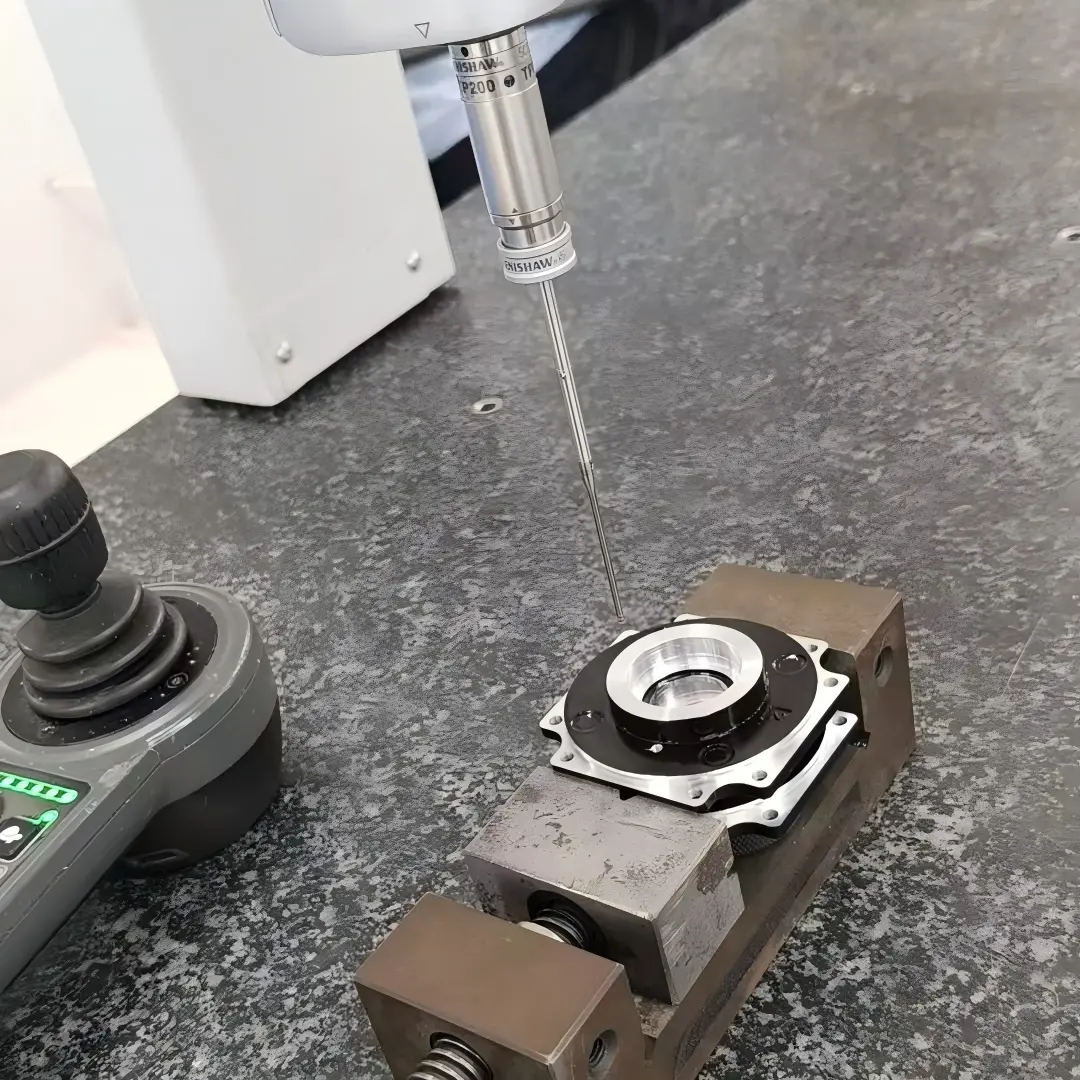
Two habits make the set work. The first is to define the critical-to-function features before the sampling plan is written: a policy that inspects everything to the same depth spends its budget on dimensions nobody measures in service. The second is to decide the sampling frequency while the quote is being prepared, because that is the point at which inspection effort is still a variable rather than a complaint. The document families and the inspection sequence — incoming quality control, first article inspection, in-process control and final inspection — are set out in the shop’s guide to the quality documents to request from a supplier, and the feature-and-sampling discipline in its framework for advanced CMM inspection.
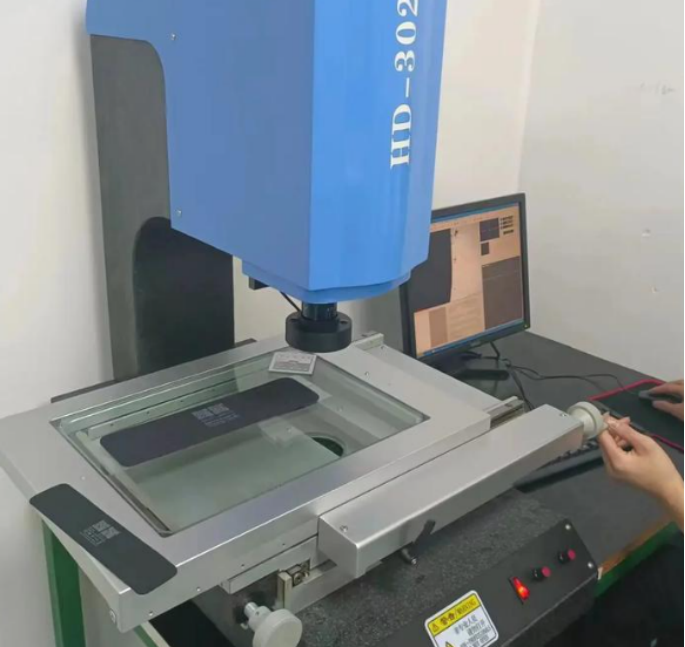
What Certification Does and Does Not Cover
It is worth being precise about ISO 9001, because buyers use it as a shortcut to trust. The standard is a quality management system framework — it certifies that a company controls its processes, manages risk and improves over time — and it explicitly does not guarantee parts. A certified supplier can still ship a bad part. The practical use of the certificate is as a system filter: it shortens the qualification conversation, and then the part-level records above do the rest. When evaluating a supplier, ask for the current certificate and the certification body, and follow it with the same document request you would make of an uncertified shop. The distinction is made in the shop’s note on whether ISO 9001 matters for custom manufacturing.
How Do You Measure Success?
Success is measured through key performance indicators that reflect both quality and efficiency.
Metric | What It Shows | Desired Trend
First-Pass Yield | Parts correct on first attempt | Increase
Scrap Rate | Material waste | Decrease
Rework Rate | Corrections required | Decrease
Defect Count | Quality issues | Decrease
On-Time Delivery | Schedule reliability | Increase
Consistent improvement across these metrics indicates a strong and stable quality system.
Can Rapid Prototyping Support It?
Rapid prototyping supports zero-defect quality by identifying design and process issues early. It allows teams to validate dimensions, fit, and function before full production.
Using CNC machining, 3D printing, and molding, manufacturers can test high-risk features and refine designs. 6CProto uses prototyping as a structured step to reduce uncertainty and improve production readiness.
Why Is DFM So Important?
Design for manufacturing is critical because many defects originate in design decisions. Poorly designed parts can introduce unnecessary complexity, variation, and production challenges.
Effective DFM simplifies geometry, optimizes tolerances, and improves manufacturability. This reduces errors, shortens lead times, and ensures smoother transitions from prototype to production.
How Does 6CProto Apply It?
6CProto applies zero-defect principles through engineering review, controlled production processes, and advanced inspection systems. Its ISO 9001:2015 certification ensures consistent adherence to quality standards.
With CMM inspection and rapid turnaround capabilities, 6CProto supports high-precision manufacturing while maintaining speed and reliability. This approach helps customers achieve both quality and efficiency in demanding applications.
How Should Leaders Launch It?
Leaders should implement zero-defect quality policy by setting clear goals, defining responsibilities, and standardizing processes across all departments.
This includes training personnel, qualifying suppliers, documenting procedures, and monitoring performance data. Regular reviews and corrective actions ensure continuous improvement and long-term success.
6CProto Expert Views
“Zero-defect quality is achieved by building strong processes rather than relying solely on inspection. The most effective strategy combines early design validation, stable machining conditions, and continuous monitoring. In custom manufacturing, this approach minimizes variation and ensures consistent results. At 6CProto, integrating DFM analysis, precision machining, and advanced inspection allows teams to reduce defects, improve efficiency, and deliver reliable parts on tight timelines.”
What Are the Main Benefits?
Zero-defect quality policy delivers measurable advantages across manufacturing operations.
-
Reduced scrap and material waste.
-
Fewer assembly failures and rework.
-
Improved consistency and product reliability.
-
Lower overall production costs.
-
Stronger customer trust and satisfaction.
It also supports scalability by making processes more predictable and repeatable.
Conclusion
Zero-defect quality policy transforms manufacturing by shifting focus from detection to prevention. By embedding quality into design, production, and inspection, manufacturers can significantly reduce scrap, avoid assembly failures, and ensure consistent compliance with specifications. The most effective implementation combines strong DFM practices, controlled processes, and continuous monitoring.
For companies seeking reliable results in custom manufacturing and rapid prototyping, adopting this approach delivers clear advantages in cost, speed, and performance. Working with experienced partners such as 6CProto further strengthens quality control through advanced inspection, engineering expertise, and fast turnaround capabilities.
FAQ
Does a zero-defect policy mean no part is ever rejected?
No, and a supplier who answers yes should be asked for the scrap figures. The policy is a claim about prevention: controls at each stage are meant to stop errors being made rather than to catch them at the end. Rejects still occur; what distinguishes a working policy is that the cause was found by a control rather than by a customer.
How is a zero-defect policy different from final inspection?
Inspection finds defects after the value has been added; the policy puts controls earlier, at incoming quality control, first article inspection and in-process checks, so a problem is caught before a whole run is made. Final inspection remains the last gate, but it is the most expensive place to find a defect, because by then the material, the machine time and the finishing are all in the part.
What documents prove the policy is working?
The first article inspection report, a CMM or dimensional inspection report naming the critical features and the instrument, a material certificate with lot traceability, in-process inspection records, the agreed sampling plan, and compliance documents such as RoHS declarations. Ask for them by name on the RFQ, because a supplier who does not routinely produce a report will not create one after the parts ship.
Does ISO 9001 certification prove a supplier ships zero-defect parts?
No. ISO 9001 certifies a quality management system — process control, risk management and improvement — and not the parts that come out of it; a certified supplier can still ship a bad part. Use the certificate to shorten the qualification conversation, then ask for the part-level records that cover the features you actually care about, and check the certification body on the certificate.
How do I put document requirements into an RFQ?
Name them individually rather than writing “quality documents as required”. List the report you want (first article, CMM, material certificate, compliance declaration), the features it must cover, and the sampling expectation, then confirm the same list on the purchase order. Agreeing it at quotation is what makes the records a deliverable rather than a favour.