
Compare 3D Printing Materials
Explore and compare 3D printing materials to find the best fit for your project. From durable plastics to flexible resins, our guide highlights key properties like strength, flexibility, and surface finish, helping you choose the right material for prototyping, production, or custom parts.
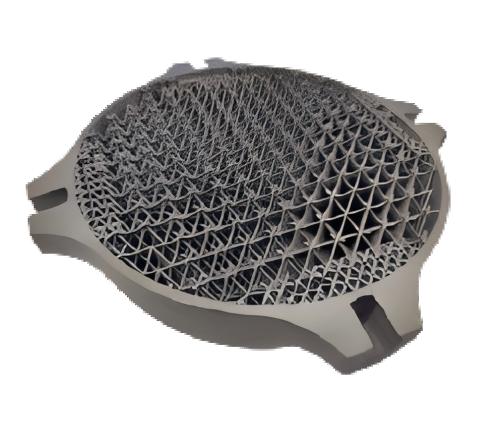
Titanium
Process: SLM
Temperature Resistance, Corrosion Resistance, Strength, Lightweight
3D printed titanium alloys, represented by Ti6Al4V, feature extremely high specific strength and excellent corrosion resistance, while being lightweight and tough. They enable the creation of complex geometries and topology-optimized designs through additive manufacturing, and are widely used in aerospace, medical implants, automotive, and high-performance sports equipment. Titanium alloys also offer good high-temperature performance and biocompatibility, making them an ideal choice for manufacturing high-performance, lightweight components.
Disadvantages: Poor heat resistance (maximum 120°C); surface roughness around Ra10, with slight pits and visible layer texture.Titanium
Process: SLM
Resistencia a la Temperatura, Resistente a la Corrosión, Resistencia, Ligero
Aleaciones de titanio impresas en 3D, representadas por Ti6Al4V, que cuentan con una resistencia específica extremadamente alta y excelente resistencia a la corrosión, siendo al mismo tiempo ligeras y tenaces. Permiten crear geometrías complejas y diseños optimizados topológicamente mediante fabricación aditiva, y se utilizan ampliamente en aeroespacial, implantes médicos, automoción y equipos deportivos de alto rendimiento. Las aleaciones de titanio también ofrecen buen rendimiento a altas temperaturas y biocompatibilidad, lo que las convierte en una opción ideal para fabricar componentes ligeros y de alto rendimiento.
Desventajas: baja resistencia al calor (máximo 120 °C); rugosidad superficial alrededor de Ra 10, con pequeñas cavidades y textura de capas visible.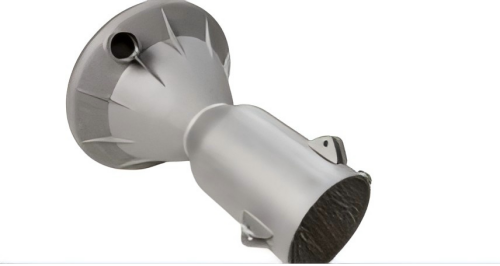
Stainless Steel 316L
Process: SLM
Durability, Corrosion Resistance, Strength
Stainless steel 316L offers excellent corrosion resistance and high-temperature performance. It combines good mechanical strength and toughness, making it a reliable material for manufacturing acid- and corrosion-resistant components. Thanks to its outstanding corrosion resistance and its suitability as a medical- and food-grade material, it is widely used in aerospace, prototypes, tooling, and medical applications. Finished parts are typically shot-peened for surface treatment. If you require any other post-processing, please inform our customer service clearly.
Disadvantages: Poor heat resistance (maximum 120°C); surface roughness around Ra10, with slight pits and visible layer texture.Stainless Steel 316L
Process: SLM
Durabilité, Résistant à la Corrosion, Résistance
Acier inoxydable 316L, offrant une excellente résistance à la corrosion et de bonnes performances à haute température. Il combine une bonne résistance mécanique et une bonne ténacité, ce qui en fait un matériau fiable pour la fabrication de composants résistants aux acides et à la corrosion. Grâce à sa remarquable résistance à la corrosion et à son caractère compatible avec les applications médicales et alimentaires, il est largement utilisé dans l’aérospatiale, le prototypage, les outillages et les applications médicales. Les pièces finies sont généralement grenaillées pour le traitement de surface. Si un autre post-traitement est nécessaire, veuillez en informer clairement notre service client.
Inconvénients : faible résistance à la chaleur (maximum 120 °C) ; rugosité de surface d’environ Ra 10, avec de légères cavités et une texture de couches visible.Stainless Steel 316L
Process: SLM
Durabilidad, Resistencia a la Corrosión, Resistencia
Acero inoxidable 316L, que ofrece excelente resistencia a la corrosión y buen rendimiento a altas temperaturas. Combina buena resistencia mecánica y tenacidad, lo que lo convierte en un material fiable para fabricar componentes resistentes a los ácidos y a la corrosión. Gracias a su destacada resistencia a la corrosión y a su idoneidad como material de grado médico y alimentario, se utiliza ampliamente en aeroespacial, prototipos, utillaje y aplicaciones médicas. Las piezas terminadas suelen someterse a granallado como tratamiento superficial. Si necesita cualquier otro postprocesado, informe claramente a nuestro servicio de atención al cliente.
Desventajas: baja resistencia al calor (máximo 120 °C); rugosidad superficial alrededor de Ra 10, con ligeras cavidades y textura de capas visible.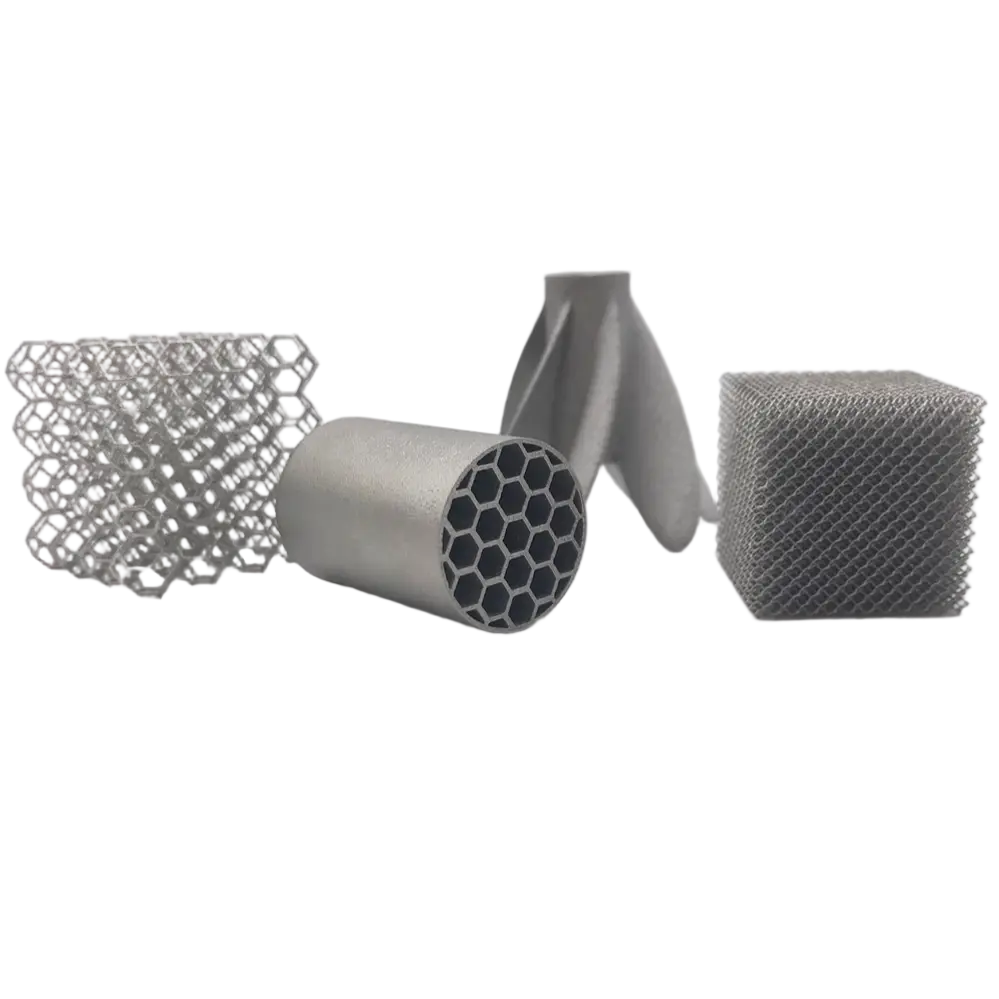
Aluminum
Process: SLM
Alta Resistencia, Resistente a la Corrosión, Ligero
Las aleaciones de aluminio impresas en 3D, representadas por AlSi10Mg y otros aleaciones de aluminio-silicio-magnesio, combinan características ligeras con excelentes propiedades mecánicas. Ofrecen una relación resistencia-peso sobresaliente, buena resistencia a la corrosión y conductividad térmica, y muestran excelente resistencia a la fatiga y fractura tras el tratamiento térmico. El material es fácil de formar, soldar y mecanizar, lo que lo hace ideal para aplicaciones aeroespaciales, automotrices y de herramientas, donde el diseño ligero y la complejidad estructural son críticos. Las piezas terminadas se suelen granallar para el tratamiento de la superficie. Si necesita cualquier otro post-procesamiento, informe claramente a nuestro servicio de atención al cliente.
Desventajas: Baja resistencia al calor (máx. 120 °C); rugosidad superficial alrededor de Ra10, con ligeras cavidades y textura de capas visible.
Aluminum
Process: SLM
HighStrength, CorrosionResistant, Lightweight
3D printed aluminum alloys, represented by AlSi10Mg and other aluminum-silicon-magnesium alloys, combine lightweight characteristics with excellent mechanical properties. They offer an outstanding strength-to-weight ratio, good corrosion resistance, and thermal conductivity, and demonstrate excellent fatigue and fracture resistance after heat treatment. The material is easy to form, weld, and machine, making it ideal for aerospace, automotive, and tooling applications where lightweight design and structural complexity are critical. Finished parts are typically shot-peened for surface treatment. If you require any other post-processing, please inform our customer service clearly.
Disadvantages: Poor heat resistance (maximum 120°C); surface roughness around Ra10, with slight pits and visible layer texture.